With 12 Tesla Semi trucks on order, R.R. Plett Trucking is installing 1.2-megawatt chargers in Langley and Kamloops to enable double-shift operations
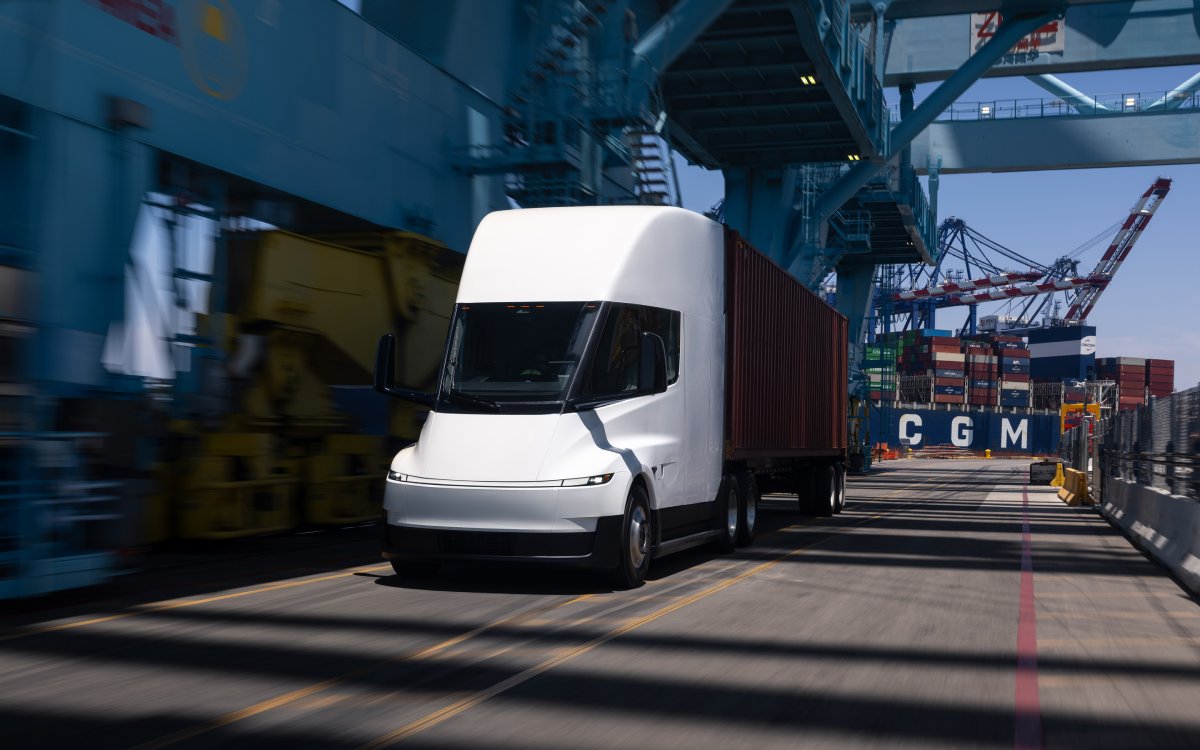
R.R. Plett Trucking in Langley, B.C., expects to receive 12 Tesla Semi trucks in June of 2027. — Tesla
With 12 Tesla Semi trucks on order, R.R. Plett Trucking is installing 1.2 MW chargers in Langley and Kamloops to enable double-shift operations
R.R. Plett Trucking has been an early mover in fleet electrification in Canada, with eight Class-8 Volvo electric trucks currently operating on drayage routes from the Port of Vancouver. Now, the company is taking another major step in its electrification journey.
Next month, it will begin installing Canada’s first two Tesla Megawatt Charging System (MCS) chargers, Electric Autonomy has learned in an exclusive interview with Trevor Plett, the trucking company’s chief operating officer.
The chargers will be located at the company’s headquarters in Langley, B.C., and at its facility in Kamloops. The buildout is in preparation for the delivery of 12 Tesla Semi all-electric Class-8 trucks expected next June.
Ten years in the making
It’s been a long time coming for the company. Plett says the company put down deposits on the Tesla trucks when they were first announced in 2017. While he has been happy with the performance of the Volvo VNR Electric trucks — which entered service with the company in 2024 — the Tesla trucks have advertised specifications that could open up new routes for the company.
“It’s a weight and a range that the Tesla can do that’s better than the competition right now,” says Plett. “The Tesla Semi is going to be under 19,000 pounds and have a range of around 500 kilometres [523 km for the Standard Range Semi, according to Tesla], where the Volvo product we’re running now is about 23,000 pounds, with a range of about 300 to 350 kilometres.”
R.R. Plett currently powers its Volvo trucks with DC fast chargers, which required no infrastructure upgrades to install. The Tesla MCS chargers, however, can deliver up to 1.2 MW of power. Plett says BC Hydro is heavily involved in the project to help provide the electrical capacity it requires. He says the chargers will be a game changer for fleet productivity once the new trucks arrive.

Join us November 4th
As Canada’s leading electric fleets are honoured at the inaugural Canadian Clean Fleet Awards.
“You can cut charging time from three hours [with DC fast charging] down to 30 minutes with the MCS, which will help us double shift those trucks,” he says. “Right now, we’re running 6am to 5pm, six days a week. But then we have to let those trucks charge in the evening, so we’re not able to double shift the current electric trucks.”
As demand for high-powered charging in the region grows, Plett says the company plans to open the Tesla MCS chargers to other fleets.
Longterm expansion plans
The Volvo trucks currently make deliveries as far as Langley. The new Tesla trucks will also operate from the Port of Vancouver, but their longer range will make longer-haul deliveries possible to destinations including Chilliwack and Hope.
But the company doesn’t plan to stop there. With operations in Calgary, its long-term goal is to electrify the trucking corridor from Vancouver to the Alberta city with additional Tesla MCS chargers.
“Right now we have projects started in Langley and Kamloops,” says Plett. “We are working on a site in Golden [B.C.], to purchase to set up a charger there, and then also Calgary.
“So the goal would be over the next three to five years to electrify that route. Obviously it’s very capital intensive, so we’re going to do it as quickly as we can, but it’s going to take some time.”
While the trucking firm took advantage of government incentives for the Volvo trucks from programs such as iMHZEV (now ended), Tesla is not eligible for the latest round of the CleanBC Go Electric Rebates Program. However, the Tesla trucks offer a significantly lower upfront cost even without incentives.
While Plett is unable to share the costs associated with the Tesla projects, the company has already made significant capital investments in electrification and plans to continue doing so. He says the lower cost of electricity compared with diesel has demonstrated that electrification can make sense from a business perspective.
The lessons learned from operating the eight Volvo trucks, along with experience gained in route management, charging and employee education, gives R.R. Plett Trucking a leg up as it takes its next steps.
“We’re two-and-a-half years into this [electrification] project, so we have some experience already,” says Plett. “But it’s a big leap, and I think not a lot of other companies are going this hard into it.
“We’re excited, for sure.”
R.R. Plett Trucking is a finalist for the inaugural Canadian Clean Fleet Awards, presented by Electric Autonomy and the Pembina Institute. Winners will be announced at a gala event in Mississauga, Ont., on Nov. 4.