‘Voluntary guidance’ points to NACS, CCS1 in an effort to avoid patchwork of technology as Chinese manufacturers are entering the market
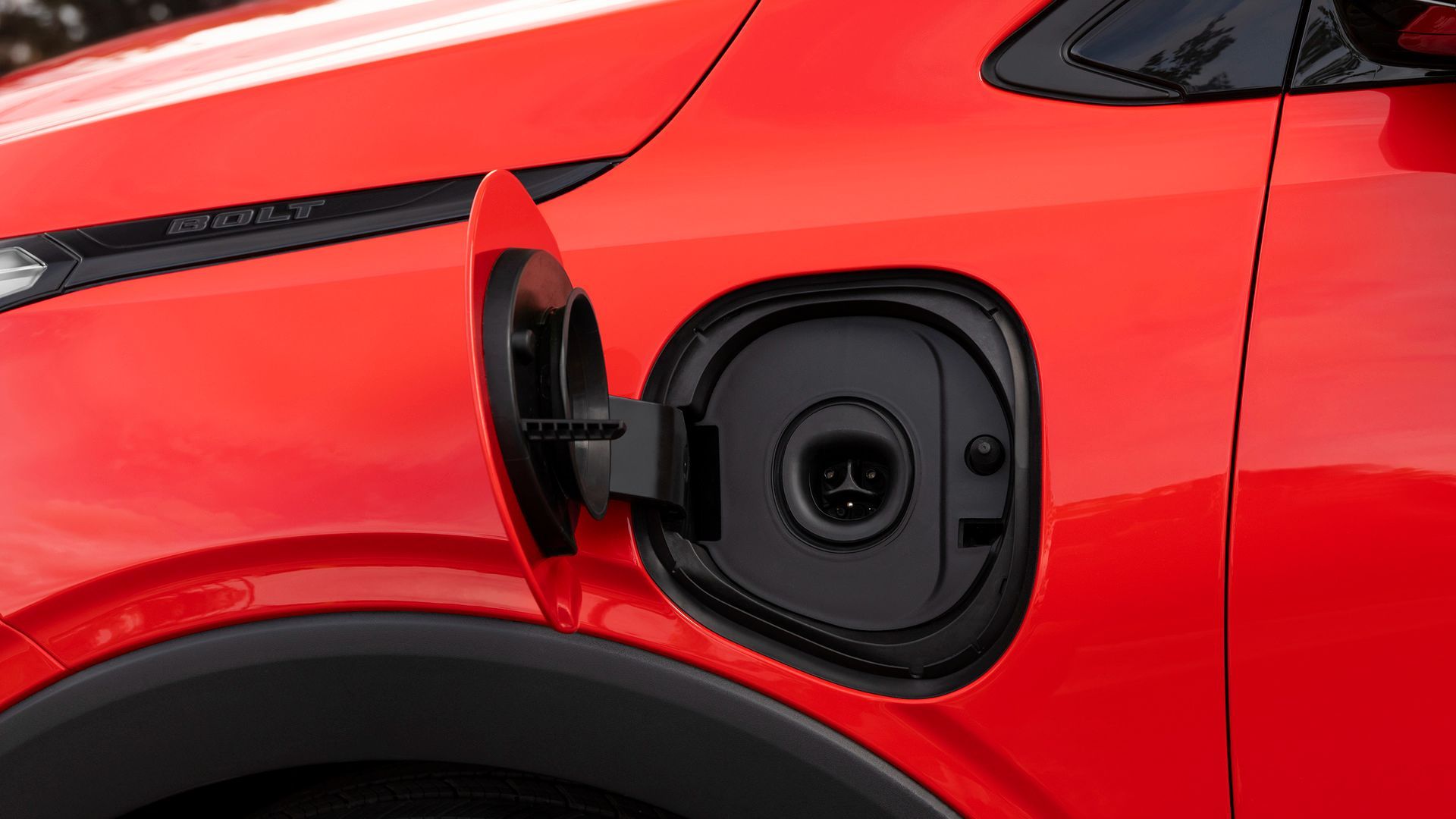
A North American Charging Standard plug on a Chevrolet Bolt. – Chevrolet
‘Voluntary guidance’ points to NACS, CCS1 in an effort to avoid patchwork of technology as Chinese manufacturers are entering the market
Transport Canada is urging automakers to equip electric vehicles sold in Canada with charging ports that match North American standards, warning that a patchwork of plugs could drive up costs and put drivers at risk.
The federal department has released voluntary guidance on charging connector and inlet compatibility, posted on its web page last updated Nov. 6. The guidance does not create or change any requirement under the Motor Vehicle Safety Act or its regulations, and grew out of a discussion paper on charging compatibility for imported electric vehicles that Transport Canada released in May.
It says a vehicle’s built-in charging port should be compatible with North American connectors and work with the charging stations Canadians already use.
The guidance comes just months before Chinese automakers new to the continent are about to enter the Canadian market.
The NACS and CCS1 standards
The guidance points to the North American industry’s shift toward the SAE J3400 standard, better known as the North American Charging Standard (NACS). Originally developed by Tesla, then offered to all other automakers, the connector handles Level 1, Level 2 and DC fast charging.
A large share of the roughly 40,000 public chargers in Canada (as of September) also use the Combined Charging System (CCS1) standard for fast charging, the guidance notes, while the older CHAdeMO plug, a Japanese protocol being phased out in North America, is more common in British Columbia and Quebec.
The department says new ports should stay safely compatible with older standards “for as long as possible.”
Other suggestions
The guidance also takes aim at adapters. While the document acknowledges the usefulness of adapters to connect from one charging protocol to another, it warns that the use of uncertified equipment “can lead to equipment failure, electrical faults, property damage, and risks to human safety.”
It also asks automakers to design their charging equipment for Canadian winters, noting parts of the country regularly reach minus 40℃, with some areas getting to minus 50℃ or colder.
Other recommendations include labelling the type of charging port on the vehicle, along with whether it accepts AC or DC power, and giving buyers plain-language information at dealerships about which chargers and equipment they can safely use.
The document covers only light-duty passenger vehicles, leaving out medium- and heavy-duty trucks. It sets no deadlines or model years for automakers to make changes.
Input from stakeholders
The department says it developed the final recommendations with automotive industry stakeholders but does not name them.
Electric Mobility Canada, a national association whose members include automakers and charging companies, was among the groups that responded to the discussion paper. In a June submission, it urged Ottawa to discourage vehicles with charging ports built to foreign standards, singling out imports using the European CCS2 and Chinese GB/T plugs.
The association called for guidance that would “strongly encourage, and in specific contexts require” alignment with North American standards, a step beyond the voluntary approach Ottawa took.