In break with U.S. policy, Canada opens auto market in exchange for canola, seafood agreement
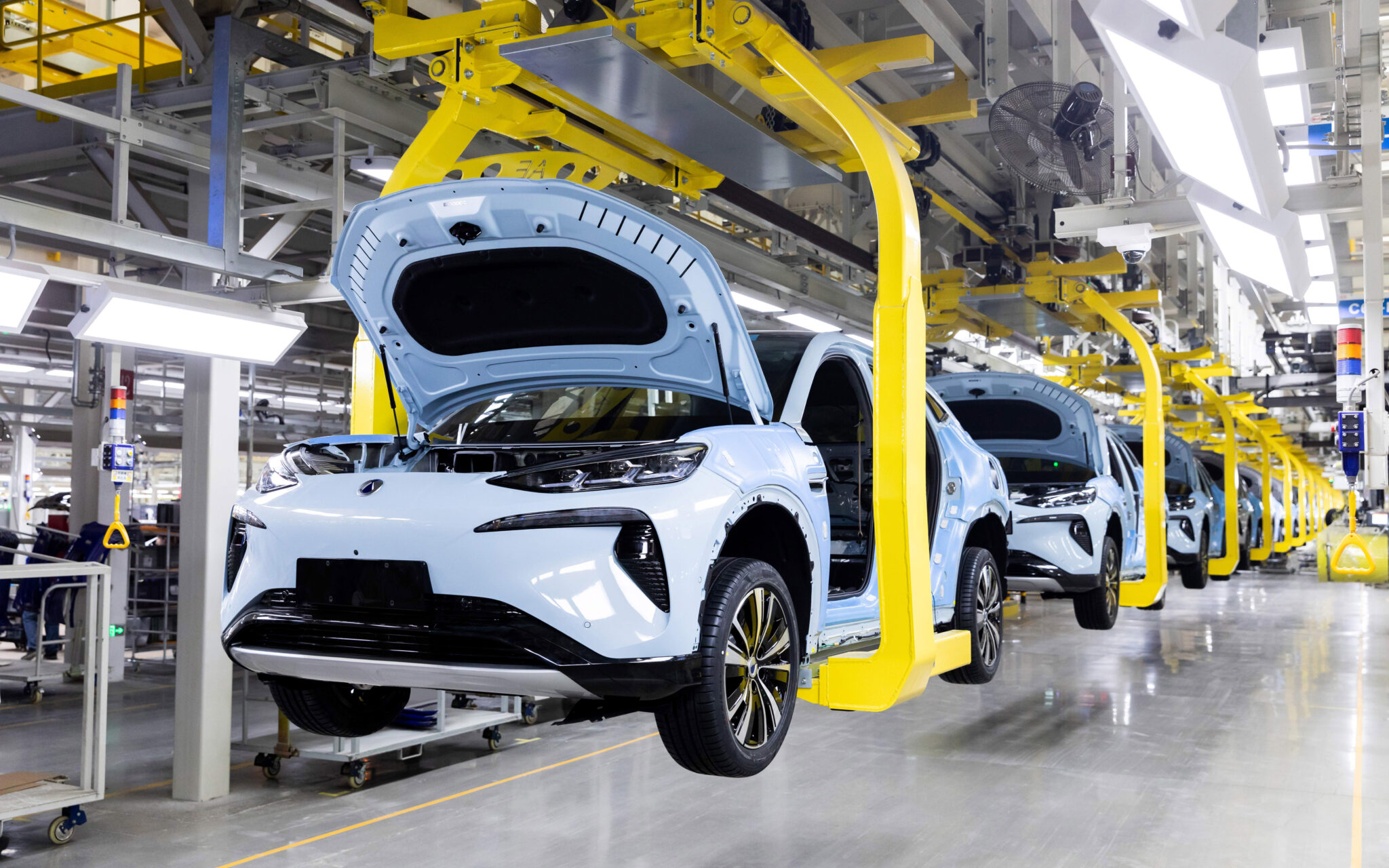
The BYD DENZA N7 being built at the Jinan factory in China. / BYD
In break with U.S. policy, Canada opens auto market to China in exchange for canola, seafood agreement
In the first visit to China by a Canadian prime minister since 2017, Mark Carney has reached a “landmark” agreement with Chinese president, Xi Jinping, that will allow up to 49,000 Chinese-built electric vehicles (EVs) into the Canadian market.
This will be done at the most-favoured-nation tariff rate of 6.1 per cent, down from the current 100 per cent.
The 49,000 vehicles represents approximately the number imported from China in 2023, less than three per cent of the Canadian domestic auto market. That quota is expected to rise by approximately 6 per cent annually, reaching 70,000 within five years.
Potential boost for Canadian manufacturing sector
The deal also stipulates that, within three years, China will increase “joint-venture investment in Canada with trusted partners to protect and create new auto manufacturing careers for Canadian workers, and ensure a robust build-out of Canada’s EV supply chain,” according to a press release.
In five years, according to the release, it’s anticipated that more than 50 per cent of these imported Chinese EVs will come with an import price of less than $35,000.
In 2024, the former Liberal government raised tariffs on Chinese-built EVs up to 100 per cent, following the lead of former U.S. president Joe Biden, along with 25 per cent tariffs on Chinese steel and aluminum. In retaliation, China increased its own tariffs to 100 per cent on Canada’s canola oil, peas and other products, with additional 25 per cent tariffs on pork and seafood products. It also imposed almost 76 per cent tariffs on canola seed.
Relief for Canadian farmers
With what both countries describe as “landmark measures,” Canada expects Beijing to lower canola seed tariffs to around 15 per cent. It’s also expected that China will drop relevant anti-discrimination tariffs on canola meal, lobster, crab and peas from March 1 to at least the end of 2026.
After the U.S., China is Canada’s second-largest trading partner. In 2024, Canadian exports to China amounted to $30 billion, while imports totalled $88.9 billion.
Mixed reaction
Reaction to the deal has been mixed, with environmental and EV advocates in favour, while those with ties to Canada’s automotive sector concerned about a lack of investment and a loss of jobs.
Rachel Doran, Executive Director of Clean Energy Canada, lauded the deal, seeing its potential to create beneficial market change.
“Not only will this answer the problem of affordability very directly, with more affordable Chinese EVs for sale, but it sends a strong market signal to other automakers: the Canadian market is now competitive, so price your cars accordingly,” said Doran in a statement. … “Traditional U.S. automakers have already experienced significant market share decline over the past two decades, well before Chinese EVs took off around the world, and walling out the competition entirely while rolling back EV plans to appease Trump will only end in tragedy. One in four new passenger vehicles sold globally in 2025 was electric. U.S. automakers must ultimately save themselves if they are to compete in a changing global landscape.”
Adam Thorn, director of the transportation program at the Pembina Institute, echoes Doran’s thoughts on the benefits of lower-cost EVs.
“Strong and sustained EV demand is essential to the long-term competitiveness of our auto sector. When affordability improves, demand follows, attracting investment, supporting innovation and securing good-paying jobs across the EV supply chain,” said Thorn in a statement. “Complementary measures, such as the EV Availability Standard (EVAS), are essential regulations within Canada’s broader EV strategy. They help bring down vehicle costs, support consumer demand for EVs and keep the auto industry competitive by aligning Canada with global markets. … “The slow increase in import quotas creates competition to encourage automakers operating in Canada to produce low-cost EVs. If EV adoption slows because prices remain out of reach, or in the absence of reliable long-term policy certainty, investment decisions and production timelines are put at risk, slowing the growth of Canada’s EV sector and the jobs it supports,” said Thorn.
Travis Allan, President and Chief Executive Officer, Canadian Charging Infrastructure Council, is encouraged by the prospect of more lower-cost EVs on the road, and not just for the environment.
“When it comes to Canada’s [charging] network, the math is simple: investment is driven by forecast future demand, which is based on the number of EVs expected on the market,” said Allan in a statement. “By lowering the barrier to entry for cost-competitive EVs, which are already available to much of the rest of the world, we aren’t just putting more cars on the road, we are providing the market signals needed to accelerate the multi-year, billion dollar investments needed to rollout Canada’s charging network.”
David Adams, President and CEO of Global Automakers of Canada, is more cautious about the agreement.
“Our members are concerned that this announcement just adds one more piece of uncertainty into a highly uncertain environment for the automotive industry with a myriad of other issues impacting the operations of all manufacturers and distributors in Canada,” said Adams. … “This is one piece of a larger strategic automotive strategy puzzle that has been hinted at by the federal government but for which we have no further clarification on items such as the electric vehicle mandate, tariffs, counter veiling tariffs, regulatory burden, etc. We need both clarity and certainty.”
Doug Ford, the Premier of Ontario, was a bit more blunt in his assessment of the situation in a statement with the CBC.
“The federal government is inviting a flood of cheap made-in-China electric vehicles without any real guarantee of equal or immediate investments in Canada’s economy, auto sector or supply chain,” said Ford. “Worse, by lowering tariffs on Chinese electric vehicles, this lopsided deal risks closing the door on Canadian automakers to the American market, our largest export destination, which would hurt our economy and lead to job losses.
“Instead of importing made-in-China vehicles, the federal government needs to be focused on working with Ontario to bring investment and jobs to factory floors in Brampton, Oshawa, Ingersoll and across the province, where assembly lines are at risk or have already left the country.
“I’m urging Prime Minister Carney to work with Ontario to strengthen Canada’s auto industry, not weaken it.”