Clean Energy Canada finds EVAP pushes the lifetime break-even cost point of a battery electric vehicle sooner compared with ICE vehicles
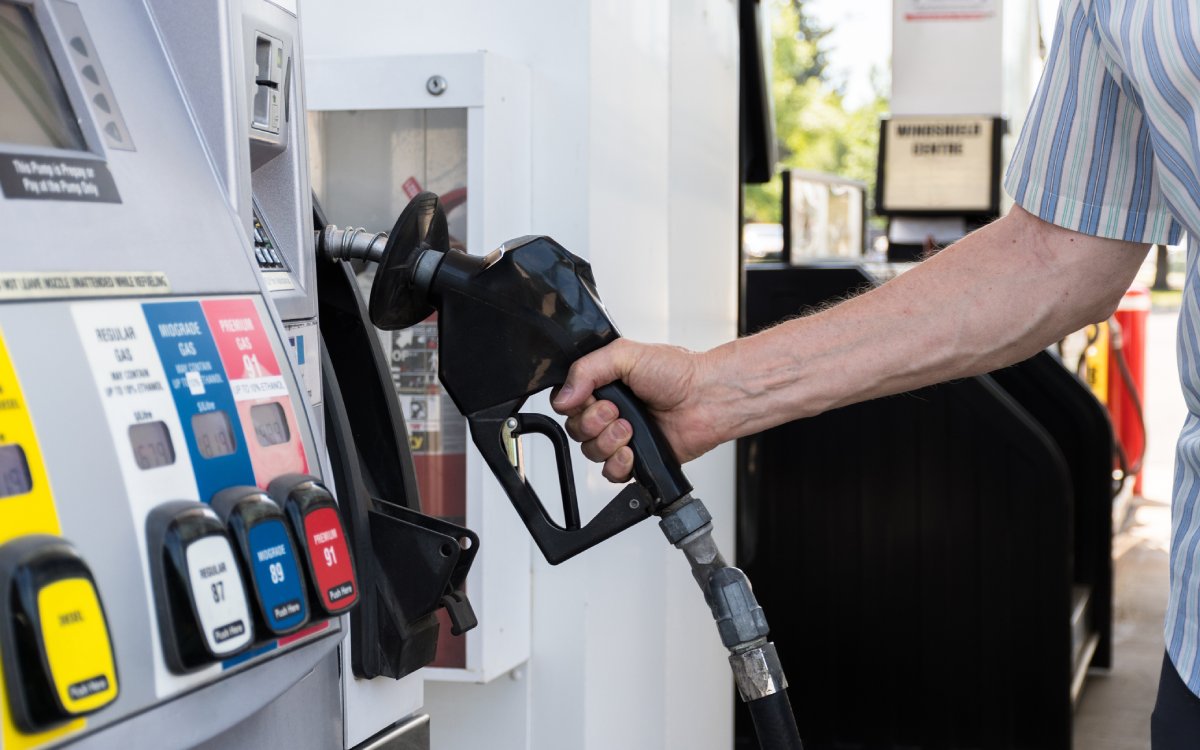
Higher gasoline prices bring the “break-even” point of savings for EVs even sooner in its lifespan. — iStock
Clean Energy Canada finds EVAP pushes the lifetime break-even cost point of a battery electric vehicle sooner compared with ICE vehicles
A recent report finds the Federal government’s re-introduction of electric vehicle incentives coupled with higher gasoline prices make an immediate, positive difference in total cost of ownership of battery electric vehicles (BEVs).
The Electric Vehicle Affordability Program (EVAP), introduced in February, offers $5,000 incentives for BEVs with a transactional price of $50,000 or less. According to the Clean Energy Canada (CEC) study titled Back in the Race, this has two positives.
The first is lowering the initial cost of the BEV. The second is that it also brings the “break-even” point sooner, offering even more savings. The recent and dramatic rise in fuel costs amplifies those savings further.
The “break-even” point for BEVs
While BEVs are generally more expensive at purchase, over their lifespan they are less expensive to operate than comparable internal combustion engine (ICE) vehicles, with low electricity rates and less overall maintenance. Because of these savings, BEVs have a break-even cost point after about three to five years (depending on driving habits) where they become cheaper to own than an ICE vehicle.
Trevor Melanson, director of insights and communications with Clean Energy Canada, says while EVAP helps with what he calls the “number-one barrier to EV adoption” (the initial price), it also has an effect on longer-term cost savings.
An additional $12,000 in savings
As an example, the study looked at the Chevrolet Equinox compact SUV. The ICE version starts at $37,442, while the BEV starts at $49,642. Before EVAP and assuming 2025 average gas prices held at $1.42, BEV drivers would have saved roughly $22,000 in total costs, including fuel and maintenance, in 10 years over the ICE version, according to CEC calculations.
With the incentive now reducing the car’s purchase price by $5,000 and combined with much-higher current gas prices, a driver could save an additional $12,000, assuming gas prices over the next decade stay around $1.77.
The combination of EVAP and higher gas prices “moved the break-even point from five years to just a little over two years,” says Melanson. “I think that really changes the headspace someone is in when they’re making a purchase decision, when they can think this is going to pay back in two years as opposed to five years.”
EVAP strategies
Melanson notes the $50,000 maximum transaction cost for EVAP is strategic.
Above that mark, the price disparity between BEVs and comparable ICE vehicles is much smaller than vehicles priced below the limit, which can see differences of up to $15,000.
“[EVAP] excludes … the upper segment of the market, where the math is already really good, and focuses taxpayer dollars on the market where incentives are closing the biggest gap and where the most people are wanting to buy cars.”
Another beneficial EVAP strategy that Melanson points to is the gradual reduction in incentives. This year, $5,000 is on the table for BEV purchasers. Next year it drops to $4,000, then $3,000 in 2028 and 2029, and finally $2,000 for 2030 — the last year of the program.
Strong motivation for consumers
With the Federal government ending the previous Incentives for Zero-Emission Vehicles (iZEV) program in January last year — earlier than the planned ending in March 2025 — there was a question as to if or when the incentives would return. Many potential BEV purchasers held back, not willing to risk losing out on cash back.
“You’re actually driving down EV sales even lower than what they would be with no rebate at all,” says Melanson.
“[EVAP] is much better to have a very clear timeline that you’ve communicated. This is going to ramp down over time, slowly, and so that way nobody at any point in time is ever holding off a purchase because they think something better is going to come along in the future.
“It actually gives you a stronger motivation to get an electric car sooner.”