Canadian Climate Institute calls for EV-ready building rules, dedicated rural funding and managed charging to close gaps the private sector won’t fill
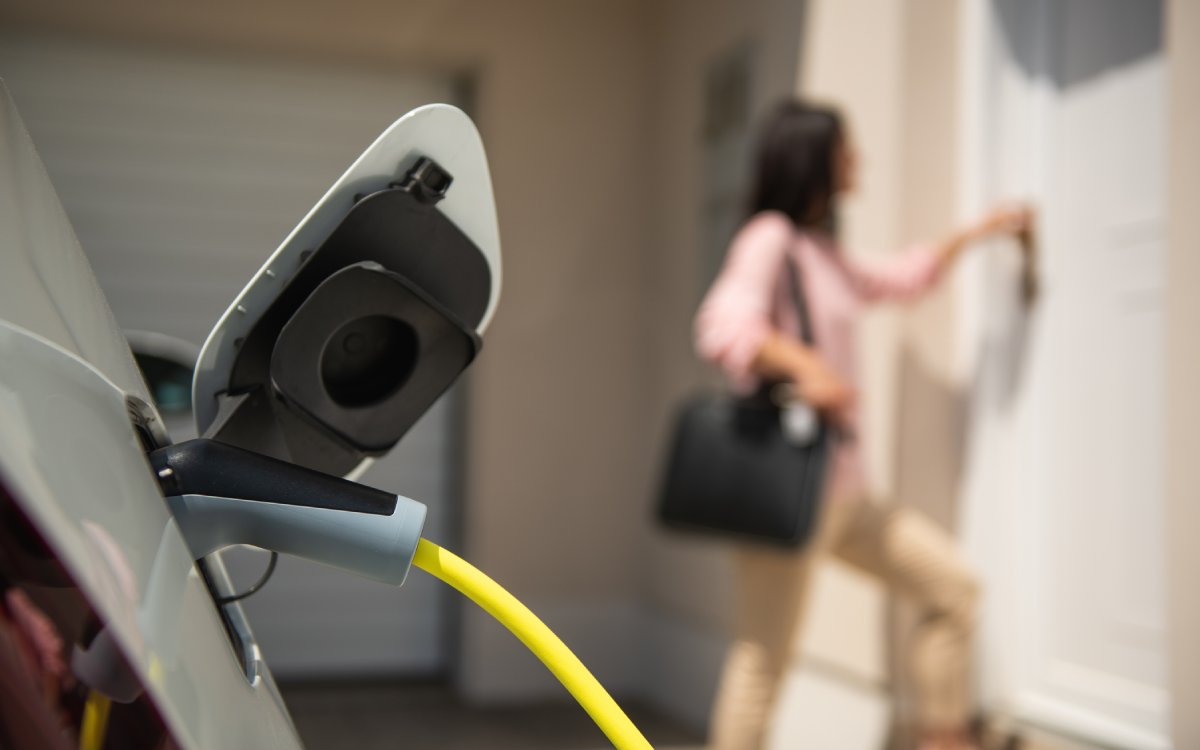
The Canadian Climate Institute says the country needs 19 million private and public EV chargers by 2040. – iStock
Canadian Climate Institute calls for EV-ready building rules, dedicated rural funding and managed charging to close gaps the private sector won’t fill
Canada will need roughly 19 times as many electric vehicle chargers by 2040 as it has today, but a new report from the Canadian Climate Institute says households and businesses can handle most of that buildout if governments set a clear direction and fill the gaps the market won’t.
The report, titled Leading the Charge, draws on modelling done for Natural Resources Canada that estimates about 19 million charging ports will be needed to support 21 million electric vehicles on the road by 2040. Canada currently has roughly one million chargers (both private and public) and one million EVs.
“Whilst that seems like an enormous kind of nation-building infrastructure project, most of those chargers can be installed by households or by the private sector,” said Zoe Larkin, the report’s author and a senior research associate with the institute, in an interview with Electric Autonomy.
The modelling projects 96 per cent of those chargers will be in people’s homes, installed when households buy an EV. About 70 per cent of today’s public chargers were built without federal funding.
Four barriers to progress
But the report identifies four areas where barriers are slowing the buildout:
- A “chicken-and-egg” problem in which drivers wait for chargers and charging companies wait for drivers;
- Rural and remote areas where chargers may never see enough use to turn a profit;
- Multi-unit residential buildings (MURBs); and
- The risk that unmanaged charging strains the power grid
“In some of the more remote areas in Canada, there are not so many cars, full stop,” Larkin said. She said that even if most of those vehicles eventually become EVs, private companies may still struggle to make charging profitable there.
The institute’s mapping found stretches of the National Highway System with no fast charger for more than 65 kilometres. And 87 per cent of the chargers funded through Ottawa’s Zero Emission Vehicle Infrastructure Program up to 2023 were in Ontario, B.C. and Quebec.
The MURB issue
Apartment and condo dwellers face a different problem. About one-third of Canadians live in MURBs, but only 12 per cent of EV owners do. Retrofitting an existing building for charging can cost three to four times more than making it EV-ready during construction, the report says, yet outside Quebec, B.C. and some municipalities, few rules require new buildings to be EV charger ready.
Larkin said provinces hold the strongest levers for new construction, since federal building codes “are not binding in the same way,” but Ottawa could help fund retrofits, for instance by opening federal infrastructure financing to those projects.
Unmanaged charging could also pile onto the evening peak on the grid. Modelling cited in the report suggests peak residential EV demand could fall by up to 48 per cent if half of EV drivers joined load-management programs.
What needs to be done
The institute makes five recommendations:
- The federal government should set tailpipe standards strict enough to meet its goal of EVs making up 75 per cent of new car sales by 2035 and 90 per cent by 2040;
- The federal government should provide dedicated funding for chargers in rural and remote communities and multi-unit buildings;
- Provinces and territories should require all new multi-unit buildings to be EV-ready;
- Provinces and territories should direct regulators to rework demand charges, which one B.C. analysis found made up as much as 80 per cent of charging operators’ electricity costs; and
- Provinces and territories should direct regulators to maximize managed charging for Level 2 home chargers.
Policy certainty underpins all of it, the report says. Ottawa recently delayed the start date for its strengthened vehicle emissions standards while keeping the 2035 target.
“Delaying it will require a steeper ramp-up in those later years,” Larkin said, adding that it doesn’t change the institute’s recommendations but “maybe just reduces … some of that certainty in the short term.”
She said the provinces that have backed EVs and charging alongside Ottawa are the ones seeing results.
“Those are the places which have the strongest numbers on both sides of the equation today,” she said.