New data from Geotab reveals how Canadian fleet operators could see gains in ROI, energy costs and utilization by learning from top performers
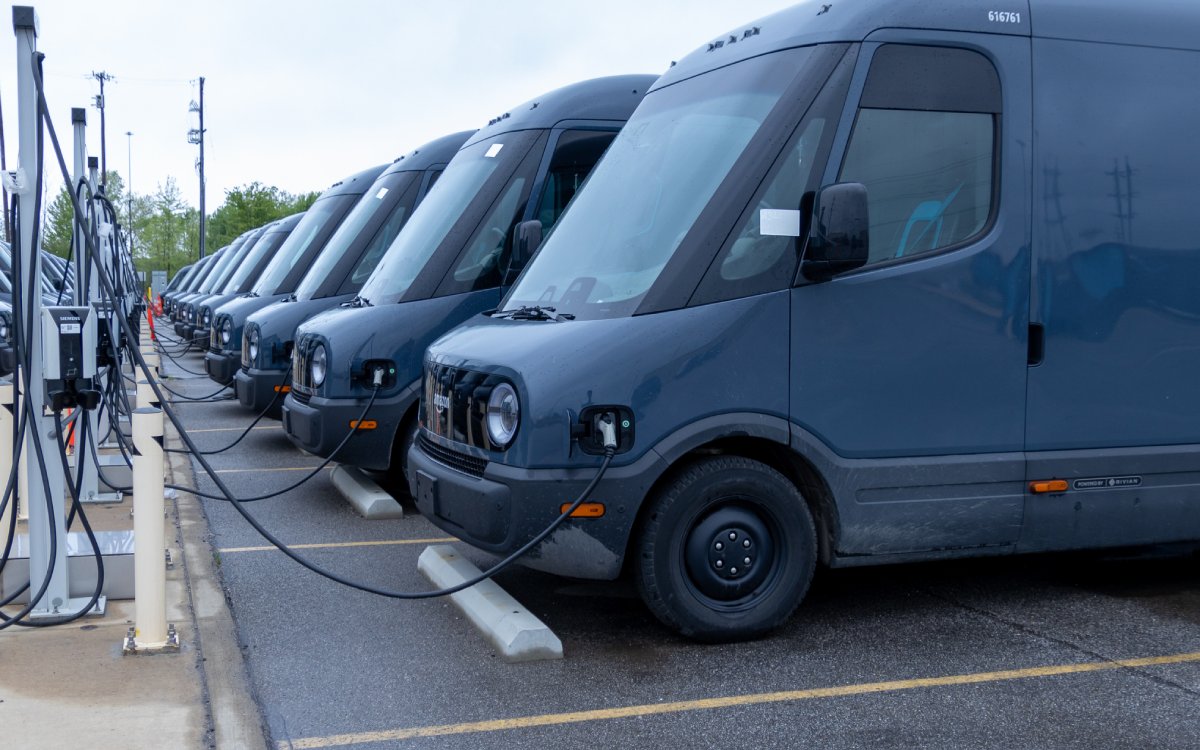
Best-in-class electric fleet operators typically have their vehicles return with 15-to-20 per cent left in the batteries. – iStock
New data from Geotab reveals how Canadian fleet operators could see gains in ROI, energy costs and utilization by learning from top performers

Produced in partnership with Geotab
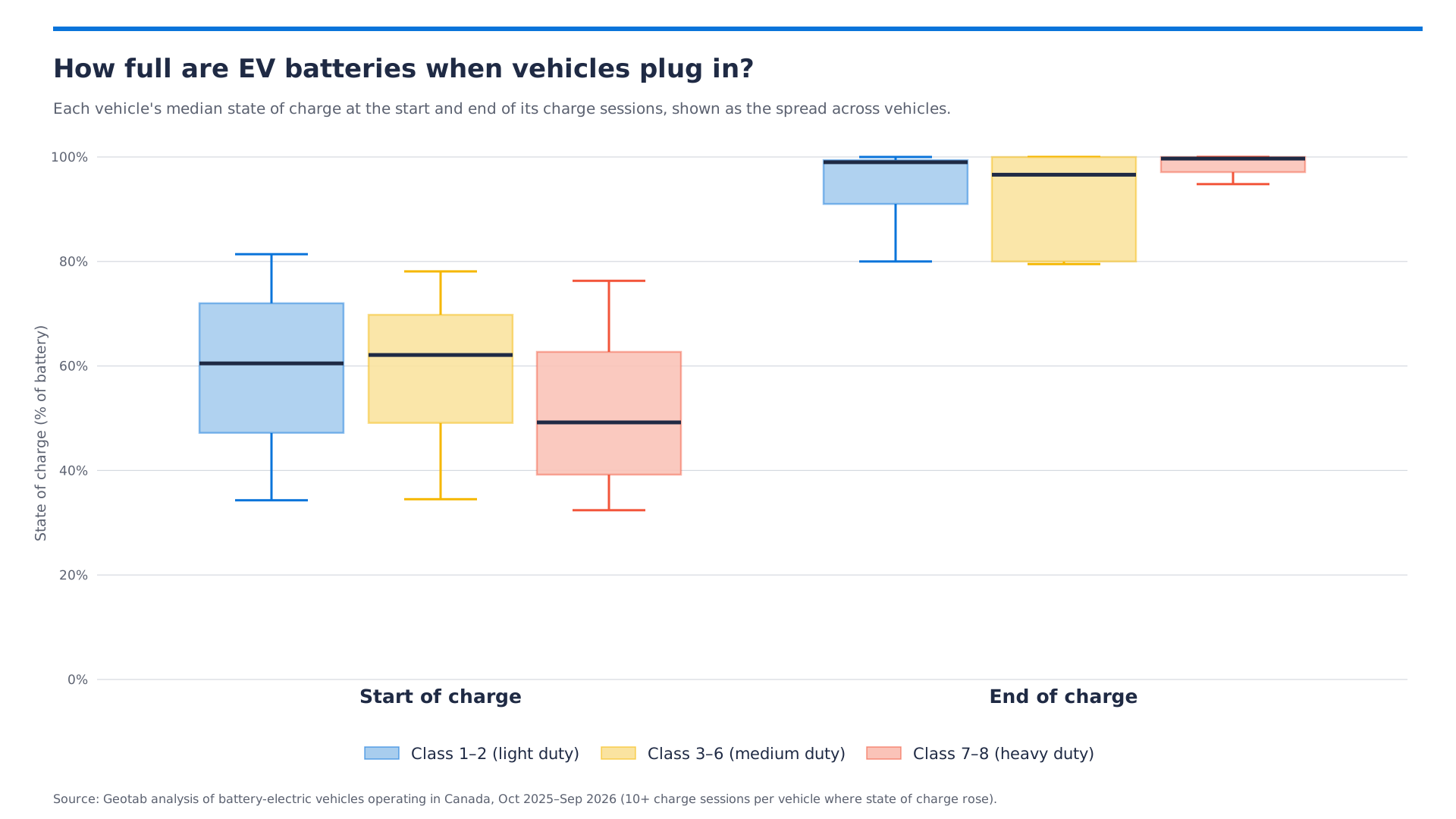
At the end of a typical day, a fleet EV pulls into its yard and gets plugged in with more than half its battery left.
That’s the surprising result from Geotab‘s analysis of Canadian fleet EV data from light-duty cars up to Class 8 trucks, from October 2025 to September 2026. In contrast, based on Electric Autonomy‘s interviews with the Canadian Clean Fleet Award winners, best-in-class operators typically return with a pack only 15 to 20 per cent full. That has a significant impact on the cost of an electric vehicle, since the payback is in fuel savings.
How much battery fleets actually use
Fleet-operated electric vehicles in Canada across every class recharge about once a day, yet most light- and medium-duty vehicles plug in with 50 per cent to 70 per cent still in the pack, and heavy trucks with about 40 per cent to 60 per cent, before charging to full.
Even in winter, when vehicles need more energy, light- and medium-duty vehicles typically plug in with roughly 40 per cent to 70 per cent left, and heavy-duty trucks with roughly 30 per cent to 50 per cent, before charging to near full.
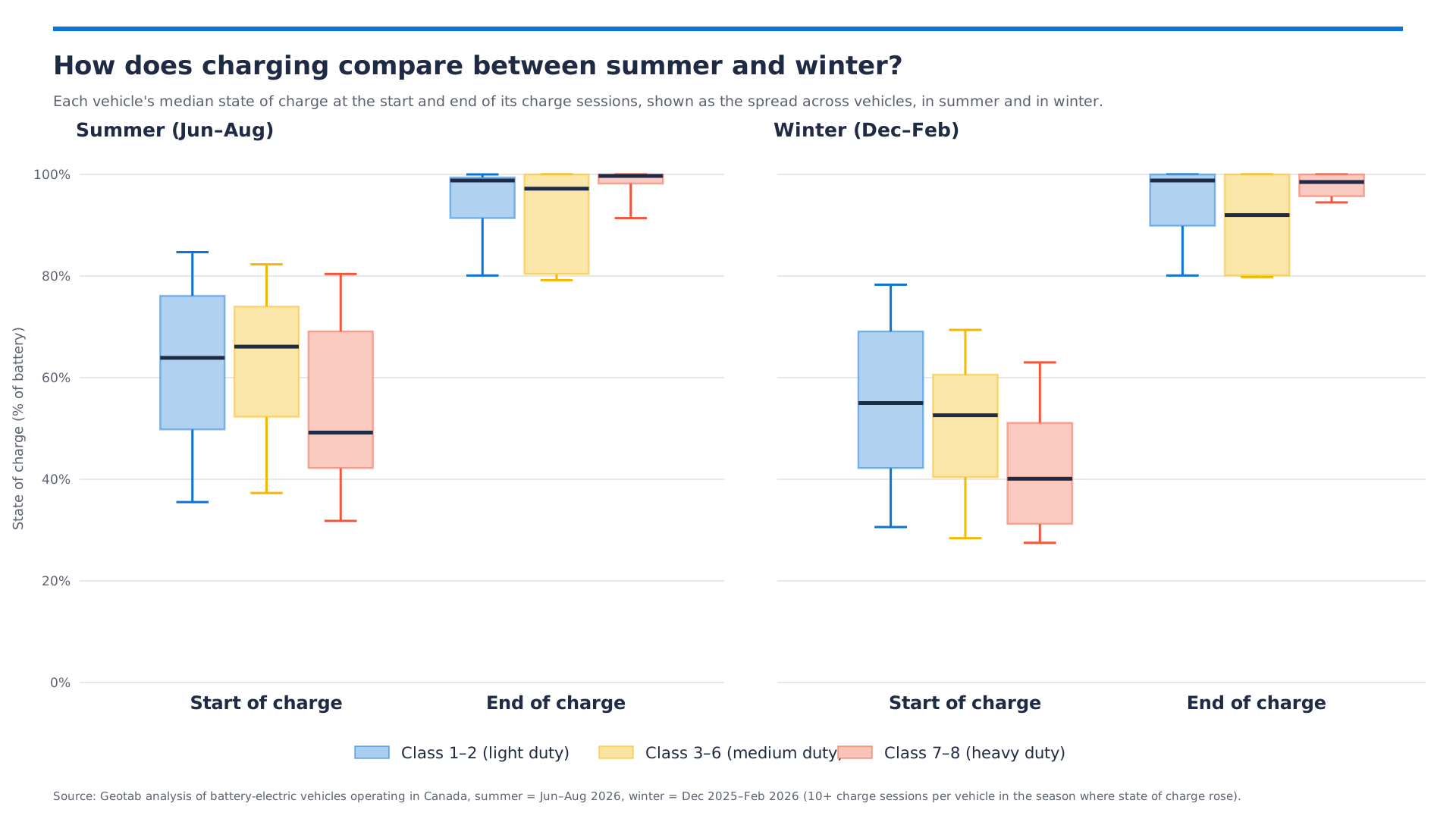
After the winter energy penalty and a 20 per cent reserve, about half of Class 1 to 6 EVs could cover twice their daily distance, and 71 per cent could cover at least 1.5 times their daily distance each day between charges. This would accelerate the payback period if they were able to shift this from gas or diesel.
High-achieving fleets will tell you that the largest saving comes from using the vehicles more. The spare range Geotab’s data reveals could cover longer routes, an extra shift or work currently done by a gas or diesel truck. When an EV takes on work otherwise assigned to a gas- or diesel-powered vehicle, it can displace fossil-fuel kilometres and improve the business case.
Putting EVs to work for longer isn’t always the answer. Some fleets operate on fixed routes, leaving little room to add extra kilometres. In these cases, they can save time by changing when they charge. Instead of charging from 50 per cent to 100 per cent, they can charge from 30 per cent to 80 per cent. Because DC fast charging slows down as the battery fills up, by stopping at 80 per cent, fleets can spend less time charging and get their vehicles back on the road sooner.
Another approach is to charge less frequently. These tactics can free up charging space, allowing the fleet to charge more vehicles on fewer chargers.
Alternatively, fleets buying EVs can also size the purchase to the work. A smaller battery pack could cut upfront cost and still leave a winter reserve, though payload, route and cold-weather needs would need checking first. In other words, opting for the “long-range” model by default rather than a cheaper trim may be costing a fleet far more than needed for the duty cycle.
What makes an EV efficient?
Using more of the battery is one way to optimize EVs. Getting more from each kilowatt-hour is another. Geotab compared speed patterns on the most and least efficient trips in each vehicle class.
In light-duty EVs, the least efficient trips include far more highway driving, with 16 per cent of moving time above 90 km/h compared with 4 per cent for the most efficient trips. Few heavy trucks reach those speeds at all. For them, slow, stop-and-go travel mattered more: the least efficient trips spent 53 per cent of moving time below 20 km/h, compared with 28 per cent for the most efficient trips.
In this dataset, the most efficient truck trips maintained speeds between 40 km/h and 50 km/h, despite these trips gaining very little from regenerative braking. This is because regenerative braking, while adding to EV efficiency, never recovers as much energy as the truck uses to accelerate in stop-and-go work. EVs are still far more efficient than their diesel counterparts in a low-speed, stop-and-go duty cycle, but the data shows that cruising at consistent 40 km/h to 50 km/h speeds is ideal.
For fleet managers, this means range planning should account for route speed patterns as well as distance.
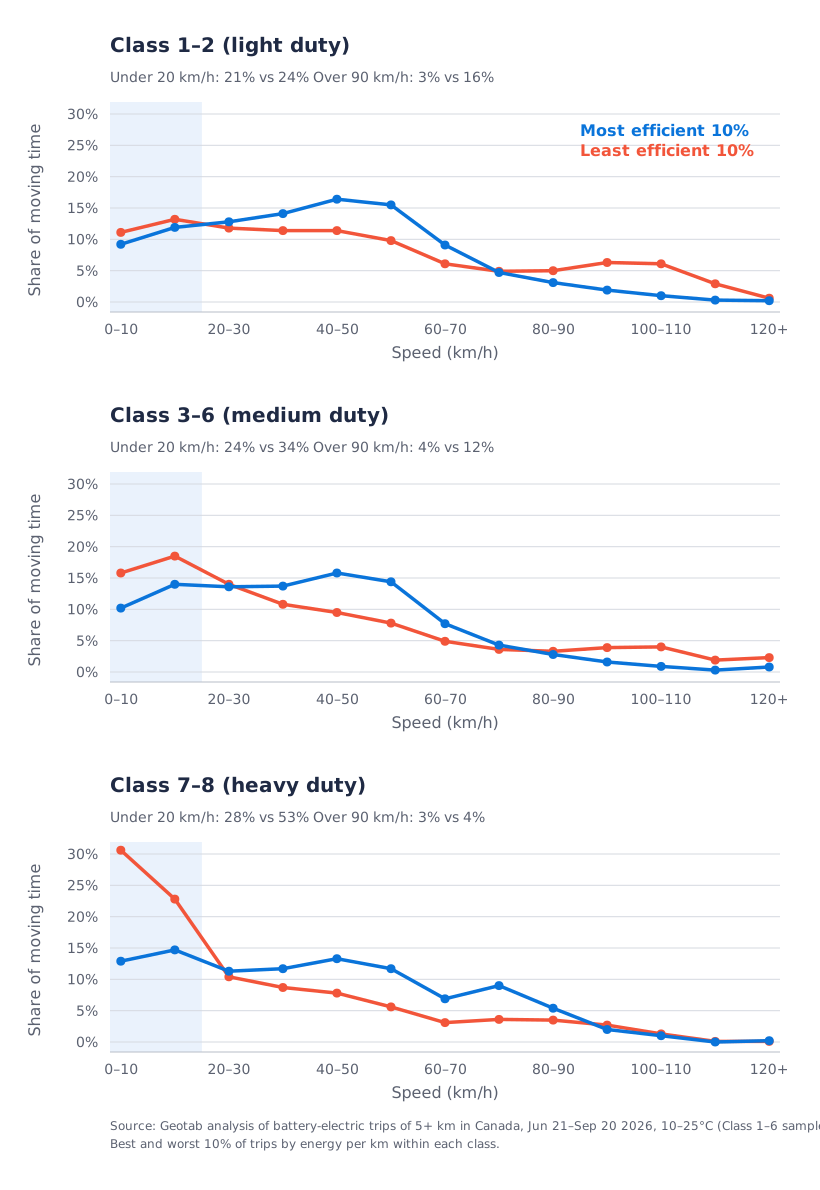
(The blue peaks show the most efficient speed profiles across vehicle classes.)
Fleet EVs are operating with range to spare, and the operators that use more of that range while getting more kilometres from each kilowatt-hour will get more work from the same vehicle — and pay it back sooner.
For more on electric fleet data, visit Geotab.