New OEM-led program connects battery holders across Canada to safe, compliant recovery pathways for recycling, repurposing or disposal
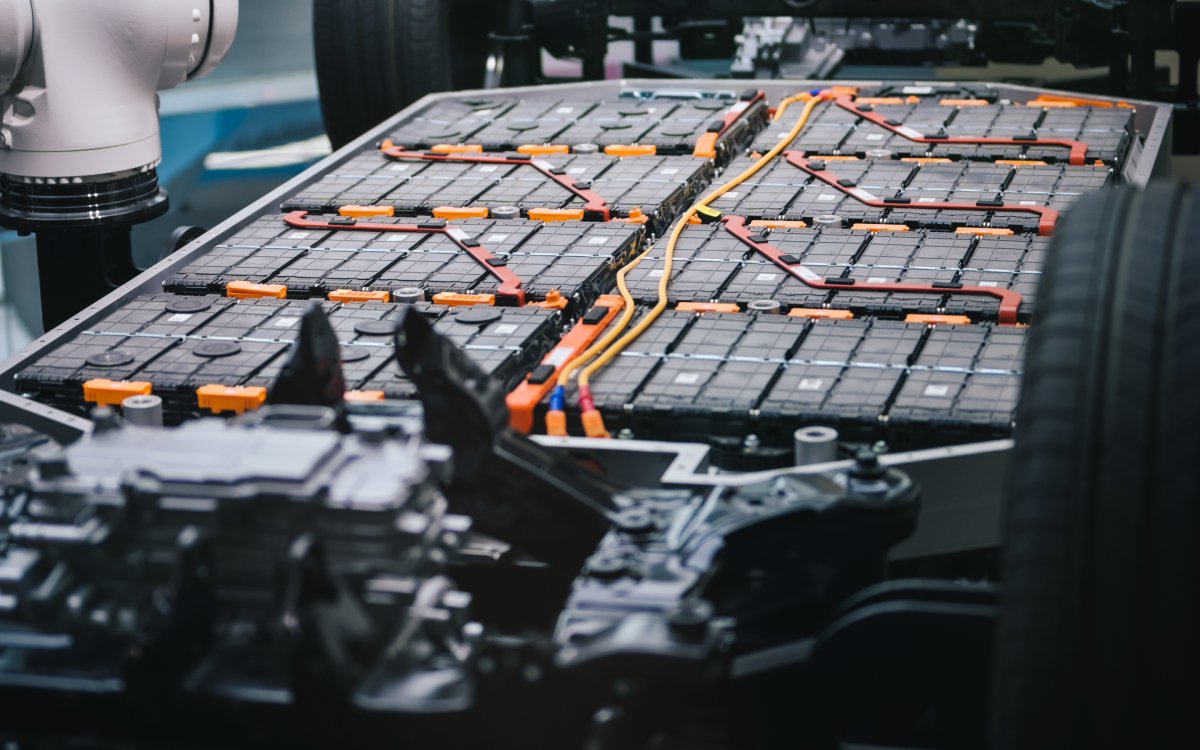
The EV Battery Recovery program will help manage the safe disposal, recycling or repurposing of EV batteries at end of life.
New OEM-led program connects battery holders across Canada to safe, compliant recovery pathways
This article is sponsor content
presented by Call2Recycle
As electric vehicles (EVs) become widely available and consumer adoption increases, there are often questions about the proper management of EV batteries at the end of life.
With an average lifespan of 13 years or more, an EV battery’s useful life can be extended through repair, remanufacturing, repurposing, reuse and, eventually, recycling. However, battery holders often face low-value or unwanted EV batteries that cannot easily move through established commercial pathways. Whether they are auto dismantlers, fleet operators, shredders or independent repair shops, they are frequently left asking: what do I do with this now?
That’s where the EV Battery Recovery™ program can play an important role.
A first-of-its-kind national solution
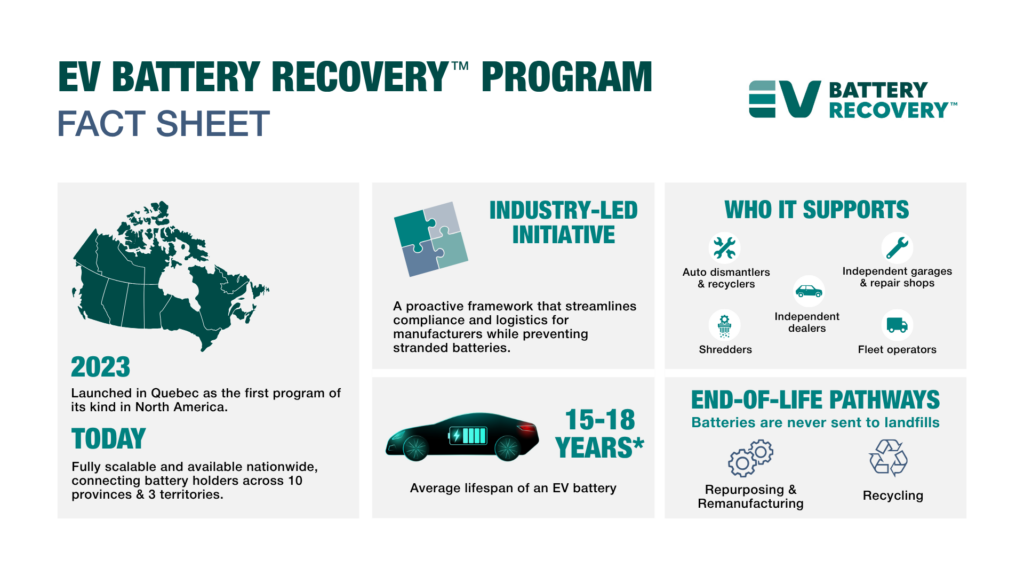
Created and funded by 31 participating vehicle manufacturers, the EV Battery Recovery™ program is the first initiative of its kind across North America, providing a harmonized national system for the safe and responsible collection, transportation and management of eligible end-of-life EV batteries from hybrid, plug-in hybrid, all-electric and fuel cell vehicles.
Batteries recovered through the program are repurposed, remanufactured or recycled, reducing waste, conserving critical resources and supporting Canada’s circular EV supply chain.
Launched in Quebec in 2023 and now available nationwide, the program connects battery holders in every province and territory with qualified service providers who can ensure proper packaging, pickup and transportation in compliance with safety and regulatory requirements. It is designed to complement, not replace, individual vehicle manufacturers’ programs for existing warranty, recall and remanufacturing pathways, as well as market-driven processes for reselling used EV batteries for a variety of uses.
It fills a critical gap by providing a solution for potentially low-value, unwanted or hard-to-manage batteries, ensuring that no eligible EV battery is left unmanaged and without a responsible path forward.
Shaping Canada’s emerging EV battery management system
At the core of the EV Battery Recovery program is the battery itself. Due to their size, energy capacity, weight, and status as Class 9 dangerous goods, EV batteries, especially lithium-ion, can be more challenging to manage than traditional end-of-life materials. When an EV battery falls outside established warranty, recall, remanufacturing or resale pathways, battery holders must navigate stringent packaging and transportation requirements and an evolving mix of end-of-life processors.
The EV Battery Recovery™ program helps unravel these complexities by connecting battery holders to a safe, reliable and compliant recovery ecosystem. Although sometimes mistaken for an Extended Producer Responsibility (EPR) model, it is a proactive, industry-led initiative in which each participating manufacturer remains responsible for funding, recovery and reporting for its own products placed on the market.
By bringing these responsibilities together under a single coordinated framework, the program streamlines an otherwise unfamiliar process, complements existing battery management pathways and prevents stranded batteries.
Vehicle manufacturers have contracted Call2Recycle Canada to operate the EV Battery Recovery program, leveraging the organization’s expertise in end-of-life battery management to design, launch, and administer a common outreach platform called EVBatteryRecovery.ca. The program addresses current market needs but also generates information to ensure effective and efficient end-of-life EV battery management solutions in Canada.
How the program works
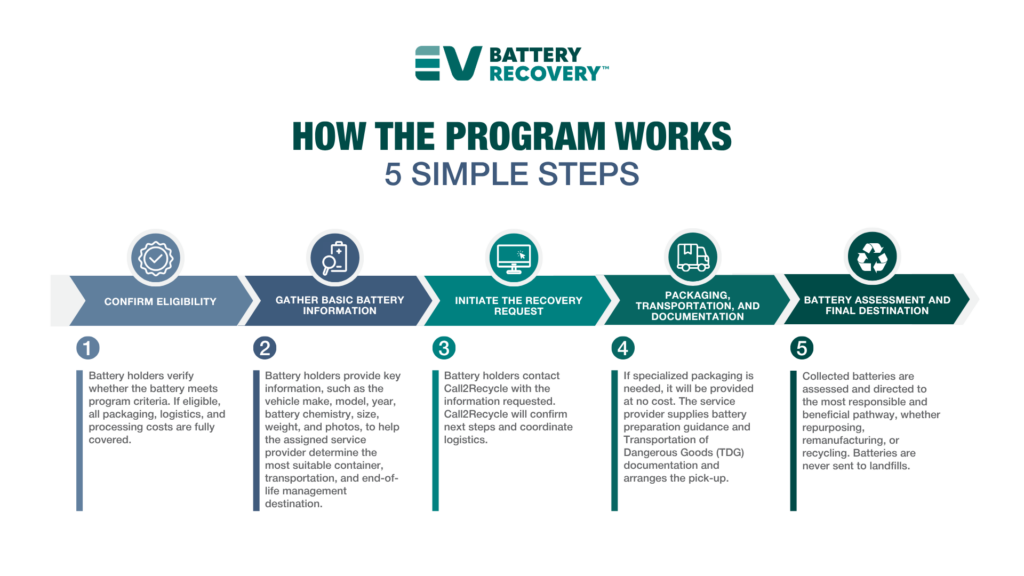
The EV Battery Recovery platform guides battery holders through a simple, step-by-step process to ensure every eligible battery is safely and compliantly collected, transported and directed to the appropriate end-of-life pathway.
- Confirm eligibility
Battery holders verify whether the battery meets the program criteria. If eligible, all packaging, logistics, and processing costs are fully covered. - Gather basic battery information
Battery holders provide key information, including vehicle data, battery chemistry, size, weight and photos to help the assigned service provider determine the most suitable container, transportation method and end-of-life management destination. - Initiate the recovery request
Battery holders should contact Call2Recycle with the requested information. Call2Recycle will confirm next steps and coordinate logistics. - Packaging, transportation and documentation
If specialized packaging is required, it will be provided at no cost. The service provider supplies battery preparation guidance and Transportation of Dangerous Goods (TDG) documentation, and arranges the pickup. - Battery assessment and final destination
Collected batteries are assessed and directed to the most appropriate pathway, whether repurposing, remanufacturing or recycling. Batteries are never sent to landfills.
Accessing the EV Battery Recovery™ program
As Canada’s EV ecosystem matures, end-of-life EV batteries will gradually appear at various points across the value chain, including outside established programs or processes. For battery holders with low-value or unwanted EV batteries, the EV Battery Recovery™ program offers a national recovery option to support safe and responsible management.
To learn more or to initiate a recovery request, visit EVBatteryRecovery.ca