Lessons from the ZEVAI pilot stream for Indigenous-led projects are helping NRCan strengthen partnerships and find opportunities for improvements
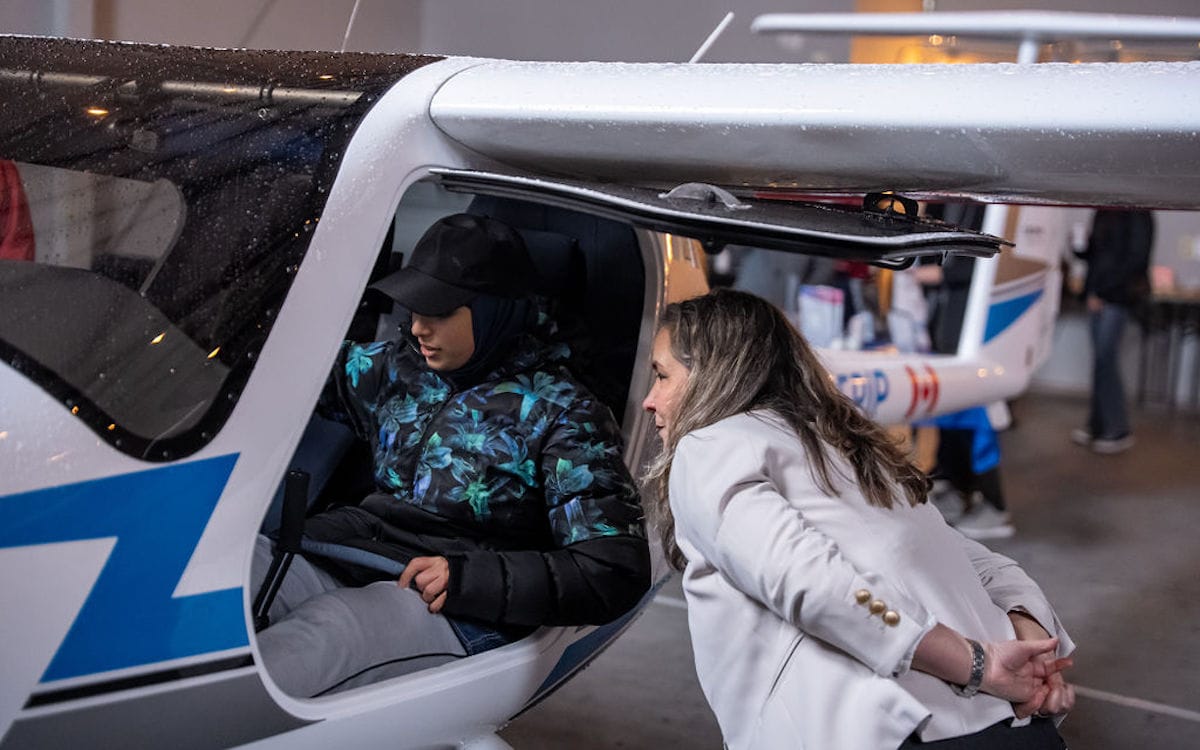
One of the organizations that received ZEVAI funding from NRCan’s pilot is elibird aero. The company is introducing Indigenous youth to electric aviation through outreach events and virtual-reality tools, to empower Indigenous youth to become pilots, engineers and innovators. Photo: NRCan
Lessons from the ZEVAI pilot stream for Indigenous-led projects are helping NRCan strengthen partnerships and find opportunities for improvements
Natural Resources Canada (NRCan) launched a pilot Indigenous stream under the Zero-Emission Vehicle Awareness Initiative (ZEVAI) in 2023, supported by a $4.5 million budget. Now, two years later, the department is sharing the key lessons learned that will continue to shape future Indigenous-focused programming.
“We knew we needed to build a program based on recognition of rights, respect, cooperation and partnership,” says Anna van der Kamp, executive director of the transportation and fuels decarbonization branch, in NRCan’s Fuels Sector.
“Throughout the pilot, there has been a lot of learning for program staff and management, with relationships formed across the country.”
While developing the pilot Indigenous stream program, NRCan staff met with Indigenous representatives, national Indigenous organizations and policy experts to learn best practices for funding Indigenous-led projects.
“The first step was to engage with Indigenous representatives to ensure the program design would meet the specific needs of their communities,” says van der Kamp.
Those discussions emphasized that meaningful EV adoption begins with relationships, and highlighted several important practices, including:
- Using a continuous intake model, rather than the typical six- to eight-week proposal window;
- Creating opportunities to build relationships and support application development;
- Approaching interactions with humility, and allowing time for relationships and proposals to evolve;
- Recognizing and respecting the distinct cultures and histories of First Nations, Métis and Inuit communities; and
- Offering advance payments to ease financial pressure.
“We are proud to partner with Indigenous communities to increase participation and enable the development of innovative projects and policies that will have benefits for generations to come,” van der Kamp says.
Examples of funded projects
Grounding the program in trust, flexibility and cultural respect has resulted in 19 Indigenous-led projects that are now helping communities shape their own clean transportation futures.
One of the examples is the Manitoba/Ontario Free Ride EV Educational Project. The initiative is creating a school curriculum that incorporates Indigenous perspectives on electric vehicles, hosting an annual EV conference and helping communities access EV grants and funding.
Positive outcomes from the project is already materializing: St. Theresa Point Anisininew Nation, a remote fly-in community in northern Manitoba, has installed EV chargers and established an EV transit system.
Additionally, the Misipawistik Cree Nation, Pinaymootang First Nation and Pimicikamak Cree Nation (all located in Manitoba) have built DC fast chargers in their communities to enable EV travel from Winnipeg to Thompson.
Other projects supported through the pilot are extending EV awareness into new sectors and skills training streams. In British Columbia, the iTOTEM klassa project launched the For7Gen initiative to spark interest in careers in the low-carbon economy among Indigenous youth through digital campaigns.
Also on the West Coast, Malahat Solutions Inc. is focusing on electric mobility in marine environments by developing a hands-on curriculum that teaches Indigenous communities how to convert fossil-fuelled boat engines to electric propulsion.
Meanwhile, elibird aero is introducing Indigenous youth to electric aviation through outreach events and virtual-reality tools. Their mission is to empower youth to imagine themselves as future pilots, aerospace engineers and innovators.
Elibird aero has hosted events that included train maintenance engineers and team members on preparing all-electric aircraft, networking sessions with clean flight leaders and a public session to raise awareness about sustainable aviation.
Gathering more insights
With these initial project insights, NRCan will “continue reflecting on successes and areas for improvement.”
The department will assess the outcomes of the 19 funded projects after the March 31, 2026, completion deadline for all projects in the stream.
NRCan will also document additional lessons learned and explore opportunities to strengthen Indigenous participation in awareness and capacity-building initiatives as part of its “next step” to gather information on this pilot stream.
The department will also share insights from the pilot with Nòkwewashk (NRCan’s sector dedicated to advancing Indigenous partnerships) to inform broader approaches to Indigenous-led program design and delivery.
“By continuing to apply principles of respect, flexibility, and partnership, NRCan aims to support community needs and build on the trusted relationships established through this pilot.”