New classes are part of a larger plan with a dedicated facility coming online in 2028 focused on clean energy and transportation

The auto shop at Vancouver Community College will have more EV-focused courses offered in September. — VCC
New classes are part of a larger plan with a dedicated facility coming online in 2028 focused on clean energy and transportation
The skilled worker shortage in the Canadian EV sector is a pressing challenge that one community college is seeking to address head-on this September.
Vancouver Community College (VCC) is introducing four new programs for students interested in becoming technicians with electric and hybrid vehicle skills.
Students can enrol in programs such as Automotive Electronics Repair and Automotive Logistics and Service Operations – Zero Emissions, and microcredential programs such as Electric Vehicle Conversion and Zero Emissions Vehicle Service and Technology.
VCC partnered with automotive companies and industry experts to help shape each program’s focus, but the specific OEMs involved are not being named publicly, says Brett Griffiths, dean for the School of Trades, Technology and Design.
Bigger plans
The focus on clean energy at VCC has also spurred a more expansive project: these courses, and others, will eventually be taught at the Centre for Clean Energy and Automotive Innovation (CCEAI), which is under construction now and expected to open for classes in 2028.
The college is building the new CCEAI on campus as part of a larger effort to bring all of its clean-energy and EV programs under one roof. For example, VCC offers a diploma in clean energy technology that focuses on the construction trades.
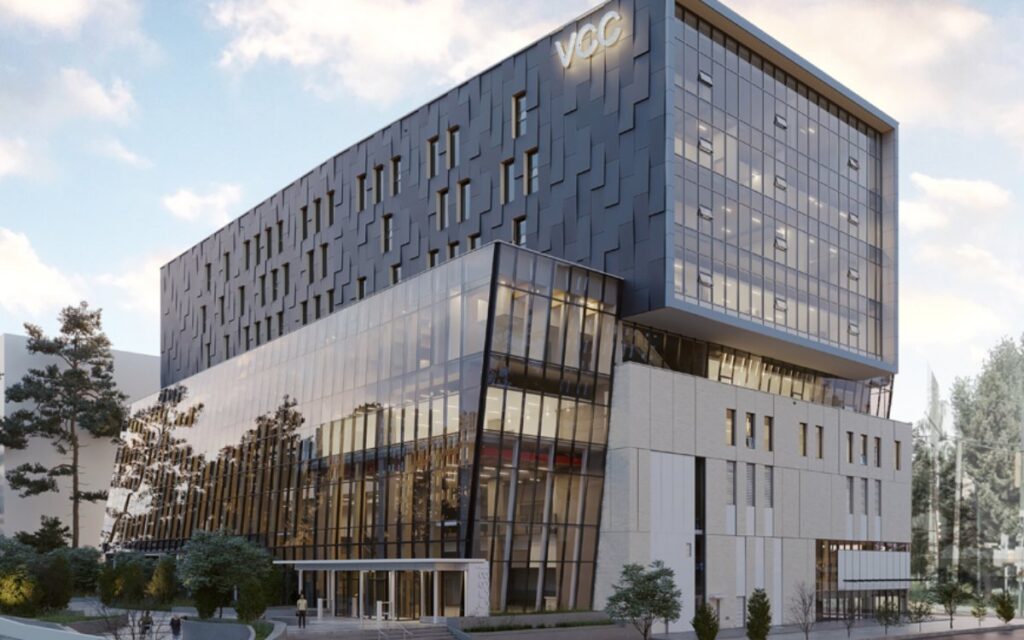
Griffiths explains the new building will feature two floors of automotive shops and a massive hydrogen service bay built into the new shop.
“With the centre being focused on clean energy and renewables, I think it’s going to be a big driver for people wanting to come and work in that space,” Griffiths says.
Different skills
When Griffiths and his colleagues began thinking about introducing these EV-focused courses at VCC, he says one of the key points identified was how “technicians for these cars need to have programming skills, so we included a Python programming course in order for students to know how to make updates to infotainment systems, for example.”
He adds that students taking Automotive Electronics Repair will learn soldering, how to repair printed circuit boards and modules, what goes into making a traction motor and how the windings all work together.
Another program, Automotive Logistics and Service Operations – Zero Emissions, will teach students to work as a “parts person and then teach them management skills they can apply in the long term,” Griffiths adds.
Bolstering the workforce
So far, the repair program’s enrolment is half full, and a waiting list has begun for the Electric Vehicle Conversion program.
VCC introduced these clean-energy repair programs into its curriculum “because we don’t have a skilled workforce for this in Canada … and some courses are doing things we haven’t seen in Canada, like how we ask students to take a gas-powered vehicle and convert it to electric,” Griffiths says.
Recent statistics, albeit related to the wider industry, support Griffiths’ statement. A 2024 report by Statistics Canada found that more than 47 per cent of manufacturing companies faced recruitment challenges, particularly when it came to hiring skilled workers.
The VCC courses are not the first in the country for alternative-fuel repair training. To find more EV-focused programs across Canada, visit the Zero-emission vehicle technician training opportunities page on the Natural Resources Canada website.