The new PV5 marks Kia’s entry into the light-duty electric van segment, with a compact footprint and modular platform and design
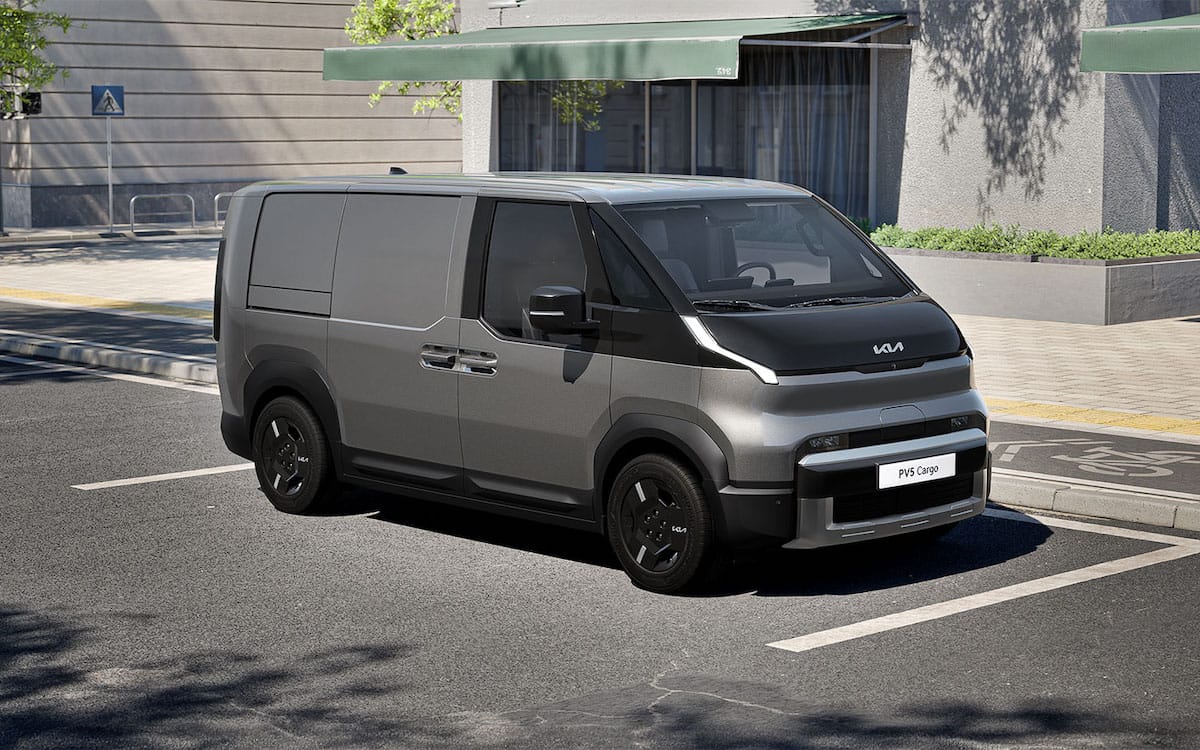
You can see the PV5 for yourself at Electric Autonomy’s 2026 EV & Charging Expo on April 8–9 at the Enercare Centre in Toronto’s Exhibition Place grounds. Photo: Kia
The new PV5 marks Kia’s entry into the light-duty electric van segment, with a compact footprint and modular platform and design
At the 2026 EV & Charging Expo in Toronto this April, conference attendees will get an exclusive opportunity to get up close and personal on the show floor with the commercial version of Kia’s next big thing: the PV5 electric commercial van.
Why is this vehicle so important?
In 2024, sales of light- and medium-duty vans (of all propulsion types) in Canada totalled 68,491 units, according to the Canadian Automobile Dealers Association. And the environmental benefit of converting to electric comes not only from how many commercial vehicles exist, but how intensively they are used.
The average Canadian passenger vehicle travels 15,200 kilometres annually. That works out to between 40 and 60 km per day. A light-duty commercial vehicle (e.g., a parcel delivery van) travels between 200 and 400 km per day — much of that in dense urban areas. Electric commercial vehicles are free of tailpipe emissions and, thanks to regenerative braking, can also reduce the very harmful effects of atmospheric brake dust.
Kia’s modular design
Kia is developing an entire range of electric commercial vehicles to help address some of the environmental effects of commercial transportation through its “Platform Beyond Vehicle (PVB)” division.
The Hyundai Group’s Electric Global Modular Platform (E-GMP), which supports most of the EVs offered by Hyundai, Kia and Genesis, is the basis of the first member of the PVB family: the PV5.
The E-GMP S (Service) variant platform powers the front wheels of this midsize van, and most of the Hyundai group’s safety and connectivity technology is available. What really sets this project apart is how Kia’s designers have optimized the compact characteristics of an electric platform through a new modular design and manufacturing process. These factors combine to maximize usable interior space relative to the vehicle’s overall footprint.
The Kia PV5 will be on display on April 8-9, 2026 at the EV & Charging Expo

Secure your ticket to Canada’s largest electrification event for business professionals.
The modular design philosophy also enables advanced flexibility within model iterations. The PVB system allows for an impressive 16 niche variations of the same platform for the global market.
In Canada, Kia is focusing on the Cargo version for the initial launch. However, Kia Canada told Electric Autonomy in a statement that “future progression and development will continue to evolve for our customers as market demands.”
This is encouraging news, as some of the variants available in other markets include passenger versions, wheelchair-accessible versions, and pickup and cube van configurations.
Vehicle specs
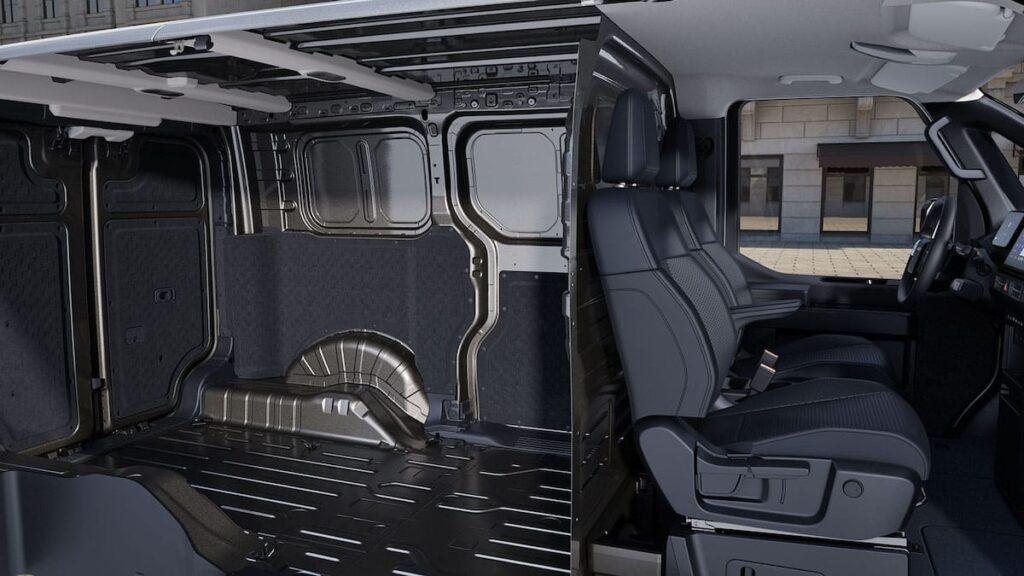
The height of the PV5 is 1,905 mm. There will be two lengths in the Cargo version, the longer model reaching a maximum of 4,695 mm. The width is 1,895 mm, or 2,255 mm including its mirrors.
These specifications indicate that the PV5 is significantly smaller than electric Class B cargo vans such as the Ford E-Transit, Mercedes-Benz Sprinter or Chevrolet BrightDrop. Its footprint aligns more with a minivan or SUV than with a traditional cargo van.
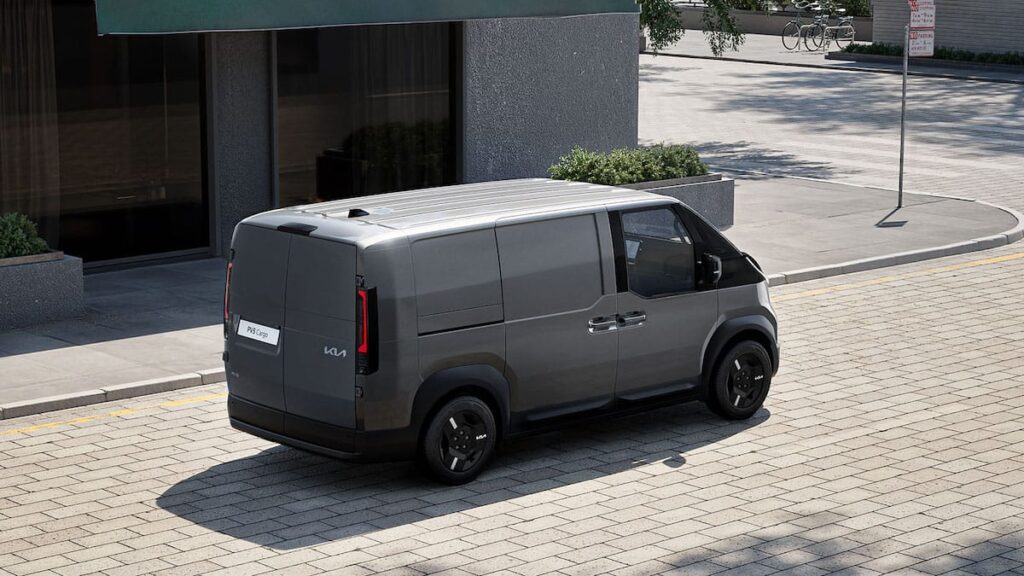
Kia’s own Carnival and EV9 are both over 400 mm longer and between 85 mm and 100 mm wider. The PV5 is taller by 125 mm and 155 mm, respectively. What stands out, something that will be evident at the 2026 EV & Charging Expo, is how much of the PV5’s inner space can be utilized for cargo purposes. Think of a small electric sea-can on wheels.
Kia has invested roughly $3.86 billion in its purpose-built PBV factory in Hwaseong, Korea. Separate wings of the facility will produce the smaller PV1 and larger PV7 siblings, all using the same modular construction process.
The factory will ultimately cover 297,000 square metres (or 2.97 square kilometres) and will have the capacity to produce 250,000 vehicles per year.
Initially, Kia plans to sell the PV5 in Korea, Europe, Australia, the Middle East and Canada, but not the U.S.
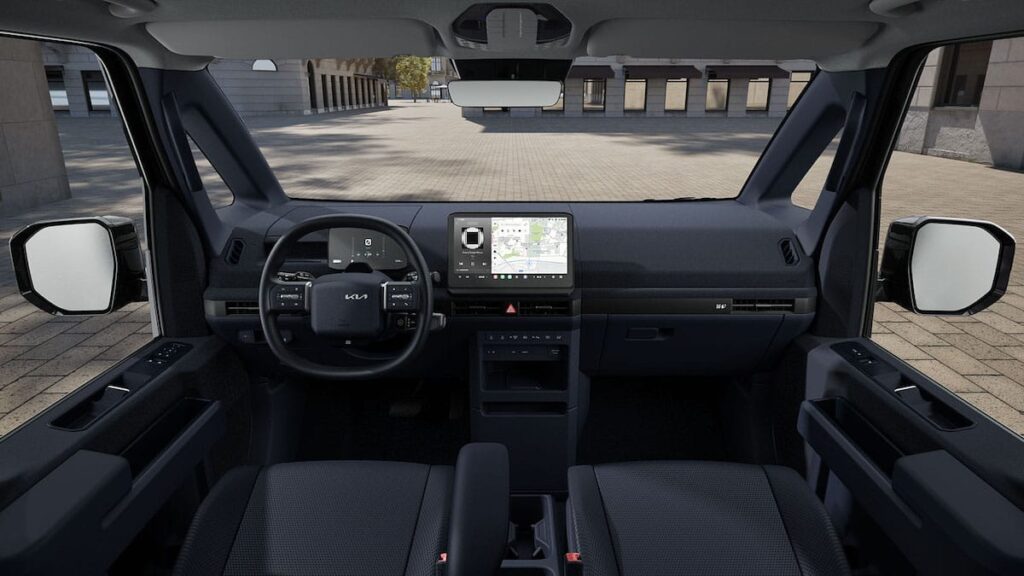
Range figures have not been published for Canada; however, European (WLTP) lists the maximum range at 416 km.
Canadian pricing is also not available yet, though EU pricing is very competitive in what is a busy market sector.
Fast track recognition
In the few months that the PV5 has been available in Korea and Europe, it has already collected several notable distinctions. It received a Guinness World Records title for “The Greatest Distance Travelled by a Light Duty Van with Maximum Payload on a Single Charge,” after travelling 693.38 kilometres.
Recently, the PV5 was awarded “2026 International Van of the Year,” considered the most authoritative global award in the light commercial vehicle sector. The PV5 is only the second vehicle manufactured by an Asia-based automaker to receive such an award in the competition’s 34-year history.
The PV5 is a competent electric van based on a proven platform. It is diminutive and maneuverable yet offers innovative flexibility and exceptional cargo capacity. If Kia Canada can borrow the pricing discipline used by its European counterparts, this van could become a regular fixture in Canada’s greener urban landscapes.
You can see the PV5 for yourself at Electric Autonomy’s 2026 EV & Charging Expo on April 8–9 at the Enercare Centre in Toronto’s Exhibition Place grounds.
Editor’s note: Facts on the total sales of commercial vehicles in Canada in 2024 have been replaced with total sales of vans.

Peter Vella calls himself a car nut with a conscience, and has found his enthusiasm for things mobile revitalized by the electric vehicle movement. He travels extensively to most any electric vehicle symposium, international car show or car museum he can get to.