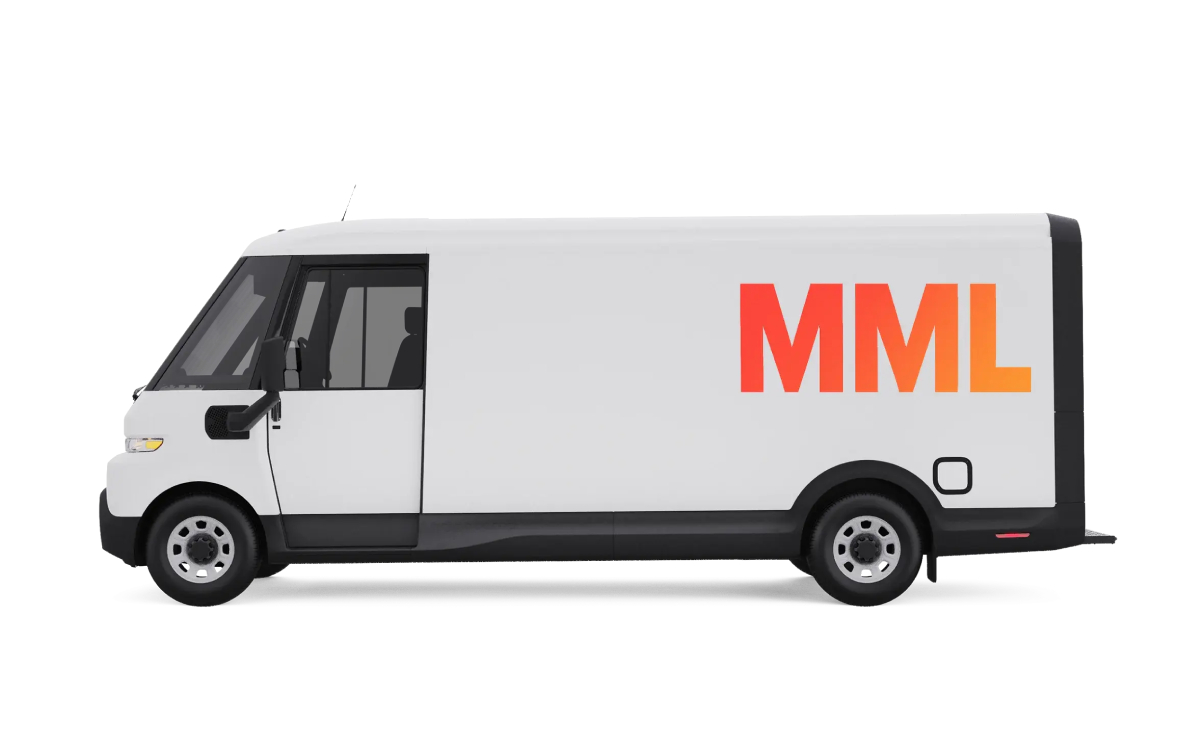
A delivery company in British Columbia’s Interior is proving that electric vans can handle some of the toughest driving conditions in the country: steep mountain grades, long rural highways and cold winters.
Moving Mountains Logistics, based in Kamloops, runs a fleet of 23 battery-electric delivery vehicles, including Class 1-2A, Class 2B-3 and Class 4-6 vehicles. It has never put a diesel vehicle on the road and has delivered more than a million parcels without emissions.
So far, the electric fleet saves around $400,000 a year in fuel costs compared with a similar diesel fleet. The fleet drives more than one million kilometres annually.
The company, established in 2022, specializes in last-mile delivery. It also offers warehousing, and its clients include online retailers, other logistics firms and B.C. wineries shipping bottles to wine-club members.
Expansion across B.C.
The company put its first electric vans on the road in 2022, when it opened its Kamloops depot with four vehicles, according to a fleet timeline on its website.
The fleet grew to 15 vans in 2024 as service expanded to Vernon, Kelowna and Merritt, and passed 20 in 2025 after the company opened a hub in Nanaimo to cover Vancouver Island.
The also built all of its own supporting infrastructure and software stack, with fleet scheduling and payroll software (DriverSched) designed around EV duty cycles, open-source route optimization tuned for range and terrain, in-house charging infrastructure at its Kamloops depot, and an electric delivery corridor connecting Kamloops to the Okanagan.
It packages the fleet’s clean-energy credentials as a service, giving shippers per-package emissions data they can use in environmental reporting.
Moving Mountains says it does not buy carbon offsets or credits to back up its green claims.
“We just never burned diesel in the first place,” the company says on its website.
The company is not slowing down. Its website sets a target of 50 electric vans by the end of 2026, with plans to add service in the Lower Mainland, the Okanagan, the Cariboo and the Kootenays for province-wide coverage.
Sponsors & Partners