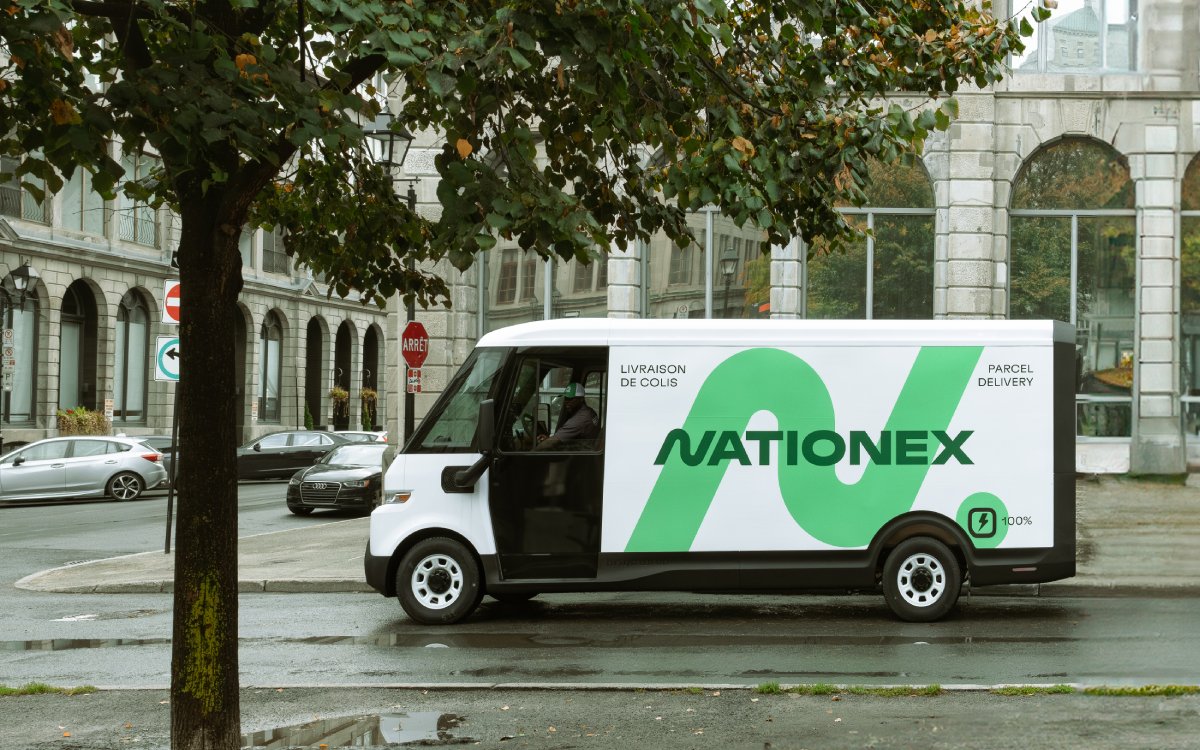
Nationex, a Quebec-based delivery and freight company, plans to have 90 per cent of its urban routes electrified by 2029 as it expands its zero-emission fleet into Ontario.
The company, headquartered in Saint-Hubert on Montreal’s South Shore, moves parcels and freight across the country. It runs its own network and warehouses in Ontario and Quebec and relies on partner carriers in the West and the Maritimes.
Nationex began electrifying in 2023 with the purchase of a startup electric delivery service in Montreal co-owned by Clément Sabourin.
“Since the beginning, I’ve been helping to lead the electrification,” said Sabourin, who is now the head of sustainability and special projects for Nationex.
Green zones
The company then acquired around 40 electric vans and launched its first “green zone,” a territory served entirely by electric vehicles, that October.
Green zones now cover Saguenay, Quebec City, Trois-Rivières, Sherbrooke, Drummondville and Greater Montreal, as well as Kingston, Toronto and its suburbs. Sabourin says Kitchener is next, with plans to launch in November.
The fleet now includes more than 150 electric vehicles, which include cargo bikes in downtown Toronto and Montreal and electric light-duty vans for last-mile deliveries.
In the Montreal region, medium-duty electric trucks handle less-than-truckload shipments and store replenishment. Five electric semi-trailers run the Montreal-Quebec City corridor several times a day.
Charging first, EVs after
To keep the vehicles running, Nationex built its own charging network of more than 100 Level 2 chargers, plus fast chargers at its Saint-Hubert headquarters and in Quebec City. It is adding four more fast chargers at its urban depot along the Lachine Canal in Montreal, which handles most of its urban deliveries in the city, and plans to have 10 in total.
Sabourin said the biggest lesson has been to get charging in place before the trucks arrive. When Nationex started three years ago, it was deploying its fleet and its chargers at the same time. “That was a bit of an error,” he said.
“We always need, first and foremost, the infrastructure in place and working,” he said. “It takes time to get the power you need, so you need to plan at least a year ahead, and sometimes that’s not even enough.”
“It never goes as planned in electrification,” he adds. “You need to jump and be ready to always correct your plan.”
More than a provider
The company’s electrification is an important selling feature with customers who have mandates to lower their own emissions. Those customers see Nationex as an ally and a sustainable logistics advisor, “not only a provider,” said Sabourin.
“If you’re just a provider talking only about cost and price, you don’t have this level of trust.”
Revenue from the federal Clean Fuel Regulations was another bonus. “We see the revenues it generates, but we never add that in our business plan,” he said. “If it comes, perfect.” And with fuel prices as high as they are, he said, the savings from electric trucks are “easy to calculate.”
Last-mile electrification has been the easier piece of the puzzle for Nationex, with available vehicles ready for shorter routes and depot charging. So the company is now turning its attention to highway routes with the electrification of longer freight corridors.
The company is involved in a test project with Propulsion Québec and the Government of Quebec along the Montreal-Quebec City route, with data eventually been made public.
“We want those findings to help go to the next step, and to help other players to understand how it works,” he said.
Sponsors & Partners