The new Electric Vehicle Charging rate aims to better reflect the nature of energy usage at EV charging stations
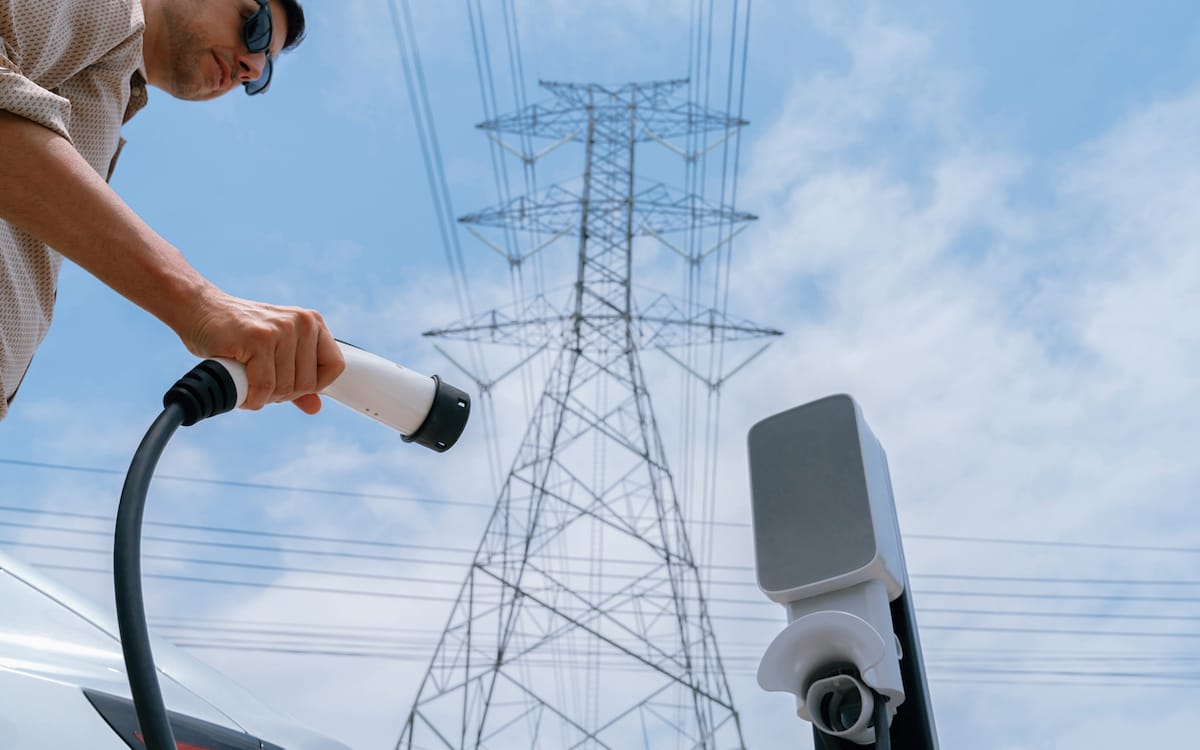
To better align costs with the amount of power EV stations consume, the OEB has set a new Electric Vehicle Charging rate of 17 per cent of the base RTSR rate. To put it simply, if a General Service customer’s base transmission costs are $100/kW, the EV charging station would instead pay $17/kW under the EVC rate.
The new Electric Vehicle Charging Rate aims to better reflect the nature of energy usage at EV charging stations
The Ontario Energy Board (OEB) is moving to cut electricity delivery costs for public charging operators with a new discounted rate, set to take effect on January 1, 2026.
Under the new Electric Vehicle Charging (EVC) Rate, eligible commercial charging sites will pay 17 per cent of the base Retail Transmission Service Rate (RTSR), which is the portion of an Ontario electricity bill that covers the cost of moving power across the high-voltage transmission system.
Currently, EV charging stations pay the same transmission rate as all customers in the General Service class, despite having fundamentally different consumption patterns.
“What was happening,” explains Mike Frisina, director of policy for SWTCH Canada, in an interview with Electric Autonomy, “is that the rate structure was adapted from one better suited to small commercial and industrial buildings, which have more predictable and flat load profiles.”
In contrast, public EV charging stations draw power in short, high-powered intervals rather than continuously.
“When no one is using it, it has a very minimal power draw,” adds Frisina.
In practice, the shift means that if a General Service customer pays $100/kW for transmission, an eligible EV charging site would pay $17/kW under the new EVC rate.
Support for early-stage and slower-uptake areas
Utilities and industry groups say the adjustment to the new EVC rate could reshape where and how quickly charging networks could expand.
According to Alectra Utilities, the lower rate is intended to reduce the cost of electricity for commercial EV chargers in regions where uptake of electric cars has been slow, in part due to fewer public charging stations.
The cost adjustment to the RTSRs will also make it more economical to build charging infrastructure at early-stage charging sites and in underserved communities, which is a key consideration for companies deciding where to deploy capital.
“The EVC allows companies that are looking at many different jurisdictions in North America to say, Ontario is starting to make more economic sense, so we’re going to devote more capital to deploying stations in that jurisdiction,” says Travis Allan, president and CEO of the Canadian Charging Infrastructure Council, in an interview with Electric Autonomy.
Who is eligible?
The new OEB rate will apply only to commercial EV charging stations that meet the following conditions:
- Charging stations must have one or more DC fast chargers
- At least 90 per cent of a station’s peak demand over the course of a month must be dedicated to EV charging
- Peak demand must fall within the range of 50 to 5,000 kW/month, the threshold that defines the General Service category
- Have a 12-month average load factor of 20 per cent or less, meaning that a station used less than 20 per cent of the time will qualify for the EVC. Conversely, a station with higher utilization will be considered high-performing and will be ineligible.
The EVC rate is not intended for home chargers or charging stations that primarily service commercial fleets.
All eligible operators will pay the same discounted rate regardless of load factor. The OEB plans to review the EVC rate again in 2031.