Facility will cater to Canadian market, with 240 buses annually planned to roll off the line by 2027 and 250 new jobs created
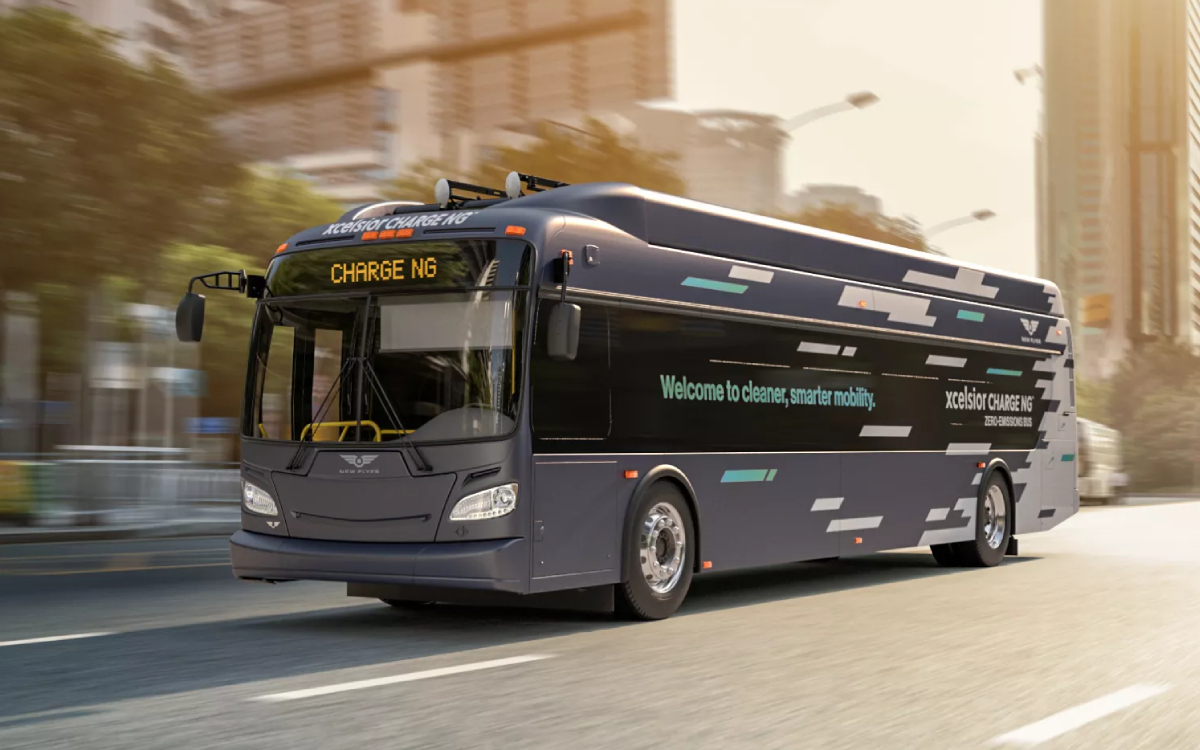
The Xcelsior CHARGE NG all-electric bus will be built at New Flyer’s new facility in Winnipeg. – New Flyer
Facility will cater to Canadian market, with 240 buses annually planned to roll off the line by 2027 and 250 new jobs created
A new manufacturing facility in Winnipeg has expanded Canada’s capacity to build electric transit buses domestically.
Bus manufacturer NFI Group and its subsidiary, New Flyer Industries, officially opened a Customer Acceptance and Delivery facility on March 3, enabling the first complete Canadian production of heavy-duty transit buses, including zero-emission buses, in 15 years.
Located at the company’s Kernaghan Avenue campus in Winnipeg, the new building occupies about 150,000 square feet within a larger 600,000-square-foot manufacturing complex that supports multiple New Flyer operations.
Increased production
The facility allows buses sold to Canadian transit agencies to be manufactured from start to finish in Canada, including assembly, testing and final delivery preparation. It also supports the production of zero-emission vehicles, including electric buses used by municipal transit systems. New Flyer has built vehicles for every province except Quebec.
Construction on the facility began in late 2024, and the first buses entered production in September 2025. The first fully Canadian-built vehicle from the new operation was delivered to Durham Region Transit in December 2025.
The project received joint investment of $38.4-million from federal and provincial governments, as well as internal company investment. The expansion is expected to create about 250 jobs and further strengthen Manitoba’s role in heavy-duty vehicle manufacturing.
NFI’s global headquarters in Winnipeg employs about 3,000 people in the province. The company was recently named one of Manitoba’s Top Employers for the second year in a row.
Production capacity is expected to increase by up to 240 equivalent bus units per year by 2027, with four line entries per week.
Helping Canadian EV bus fleets
Before the new facility opened, New Flyer manufactured bus shells in Canada before sending them to its subsidiary in the U.S. for final assembly. The new Winnipeg operation allows vehicles destined for Canadian transit agencies to be completed domestically.
The new facility supports growing demand for zero-emission transit vehicles across Canada as municipalities transition to fleet electrification and other low-carbon transportation technologies.
Expanding domestic manufacturing capacity is expected to help Canadian transit agencies procure electric vehicles while strengthening local supply chains and advanced manufacturing expertise in the country’s transportation sector. While many components used in bus manufacturing are currently sourced from the U.S., the company says it will increase Canadian sourcing where possible as production expands.
A North American balance
The change comes as North American transit manufacturing continues to operate within complex cross-border supply chains. U.S. transit procurements must meet domestic sourcing thresholds under the Buy America Act, which requires a significant share of materials used in publicly funded buses to originate in the United States.
The Winnipeg facility enables the company to better balance production between Canadian and American customers. Approximately 20 bus shells are produced weekly, with some continuing to support U.S. production and others now being completed in Winnipeg for Canadian transit systems.